By Abby Burczyk
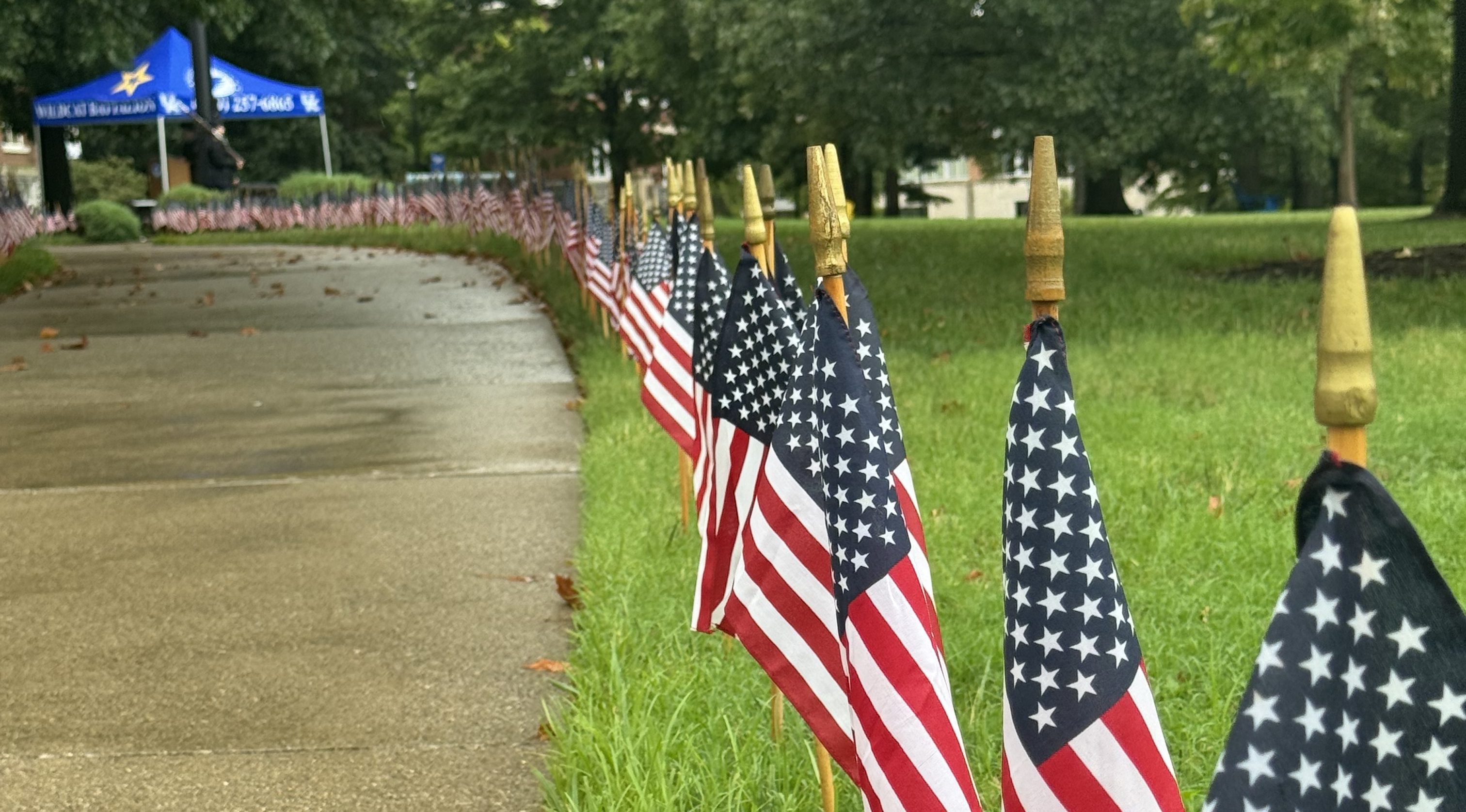
On September 11, 2026, to commemorate the 25th anniversary of the events of 9/11, the Patterson School of Diplomacy and International Commerce held a panel for the first-year students. The room was filled with future leaders in international security and other disciplines who will enter the workforce in an era shaped by the watershed events of 9/11. To begin the panel, Dr. Robert Farley exposed the tension in the room; only four of the attendees were alive for the events of 9/11. The purpose of this event was not to discuss the logistics of the attacks, but more so to frame the series of events from the perspective of four Americans working in different sectors of international affairs for the benefit of future global leaders.
The first panelist, former Ambassador Carey Cavanaugh, relayed the perspective of someone working at the State Department. Before the attacks of 9/11, Cavanaugh spent time as a peace negotiator for the U.S. and was extremely familiar with terrorism from the context of a Eurasian perspective stated that the day marked “the end of innocence for America.” While at the time it was clear that the American government was aware of various accounts of terrorism across the globe, the American public possessed a sense of ignorance to the feeling of fear accompanied by violent attacks on the homeland: “they were used to it, we were not.”
From a comparative perspective, Dr. Gregory Hall accompanied Cavanaugh’s account of 9/11 with one from academia. Hall was getting ready to begin his international relations lecture in Southern Maryland when he walked in to his students watching news coverage of the Twin Towers on the monitor. While he remembers everyone being stunned, what stood out to him the most was the emotion coming from a Bosnian student, nearly six years since the end of the events in the former Yugoslavia.
In the months following 9/11, the student body looked at the study of international relations in a different way. Students and other civilians spent a lot of time trying to comprehend the events in places of worship or even through a scientific approach by visiting those in the field of psychology. He stated eventually, “all the students that were enlisted in the military started to disappear; some never came back.”
Like many other members of the armed services, Lieutenant Colonel Amy McGrath sees 9/11 as one of the defining moments in her career. As a young recent flight school graduate, McGrath was called in to base as soon as the West Coast got word that the attack on the World Trade Center could be an act of terror. Though she was thousands of miles from where the attacks occurred, her job was to sit ready for launch to potentially escort commercial aircraft down to the ground if they did not follow orders. In the week following, she would be leaving for the Middle East.
Though the United States was the only country physically attacked on 9/11, McGrath recounts the international support felt in the immediate months of military deployment. “The world was with us,” as she described the involvement of twelve other countries that participated in various operations. In line with the United States’ war on terror, McGrath served two additional combat deployments in Iraq and Afghanistan.
In the long term, Dr. Kathleen Montgomery, the final panelist, saw her career field change in the years following 9/11. On the day of the attacks, she was the only panelist who was present at the University of Kentucky teaching a class that day in the economics department. By 2003, Montgomery was on her way to begin development projects in Afghanistan in the midst of the early years of U.S. occupation.
“It changed the way development was thought about.” While the U.S. attempted to bring long term change in Afghanistan, once the occupation ended in 2021, the country shows little evidence of sustained development in major capacities.
Though most of us in the room will never know what it was like to witness the events of 9/11 live, our careers in the international field live in the legacy of that day. For our panelists, the last twenty-five years have served as plenty of time to reflect on the decisions made by our leaders in the aftermath. For those like McGrath who have shifted her focus to policy, she doesn’t claim to be proud of how the U.S. politically responded in the decades post 9/11 now in hindsight. She advocated for a more refined prioritization of security objectives.
For long term members of the Foreign Service like Cavanaugh, he still finds it shocking that there was a lack of imagination that an attack of this scale could happen on U.S. soil. While he is unsure if something like 9/11 could physically happen again to the U.S., our security concerns are far from over as we encounter new security challenges in areas like A.I. and space.
Above all, there is a greater call for curiosity into the events and aftermath of 9/11 by younger generations. This tragic event didn’t just teach us lessons in policy; it taught many generations about unity both domestically and internationally. With that, the panel was concluded, leaving us with the common conclusion that global events are rarely simple. This panel was a reminder that 9/11 can not be simplified to an isolated moment, but should be seen as the catalyst to a series of events that would define American foreign policy decades later. As we remember 9/11 and its victims on its 25th anniversary, we can hope as students of diplomacy to honor their legacy by approaching future global security challenges with greater nuance and consideration of perspective. Though many of us may not remember the day, we are not beyond its memory.


Leave a Reply