LBM1948, CC BY-SA 4.0 https://creativecommons.org/licenses/by-sa/4.0, via Wikimedia Commons

By Allie Heiniger
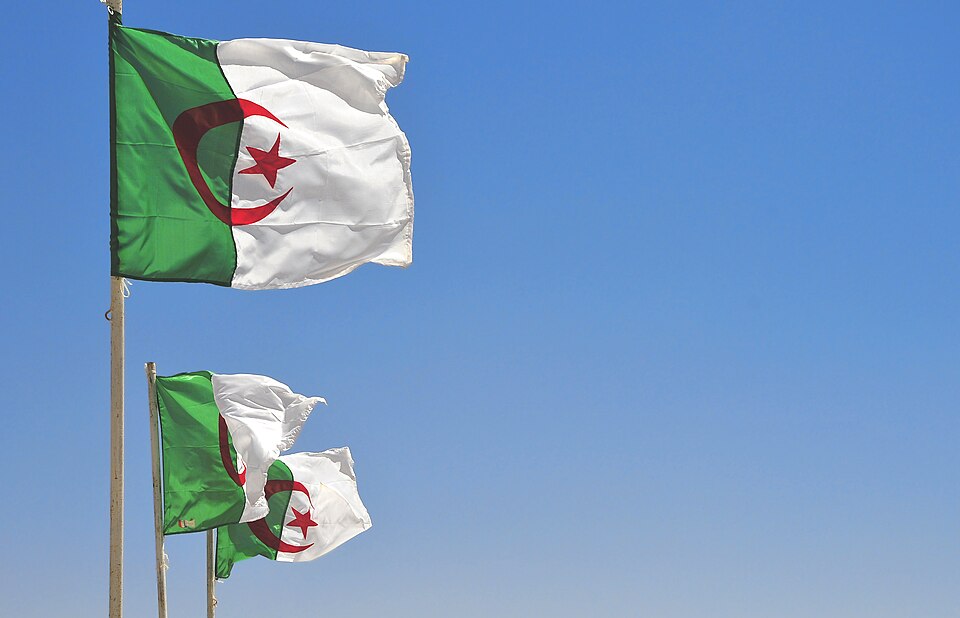
On September 10, 2026, Algeria severed diplomatic relations with the United Arab Emirates (UAE), accusing Abu Dhabi of repeated “provocative or hostile” actions. Algeria expelled the Emirati ambassador and closed its airspace to UAE-registered aircraft, though it temporarily exempted commercial flights. The UAE responded cautiously and indicated that it hoped the rupture would remain temporary. The move was dramatic, but it was not sudden. Relations had steadily deteriorated over Morocco, Western Sahara, normalization with Israel, competing interests in the Sahel, and Algerian accusations of Emirati interference. Algeria increasingly sees the regional balance of power shifting against its interests. Its expulsion of UAE diplomats signals Algiers’ resistance to external actors seeking to expand their influence in North Africa and the Sahel.
Western Sahara and the Sahel
Western Sahara remains the central issue. Algeria supports the Polisario Front and Sahrawi self-determination, while Morocco claims sovereignty over the territory. The UAE supports Morocco’s position, placing Abu Dhabi directly opposite Algeria on an issue that has shaped Algeria-Morocco relations for decades. The rivalry now extends into the Sahel. Morocco has strengthened its economic and diplomatic relationships with Sahel governments, while Algeria’s relationships with some of those governments have weakened. Algeria has traditionally treated the Sahel as part of its immediate security environment. Mali and Niger share long borders with Algeria, and Libya borders Algeria to the east. Instability, armed groups, trafficking networks, and foreign involvement in these states directly affect Algerian security.
The UAE’s expanding role in Africa adds another layer to the rivalry, particularly as Abu Dhabi has moved beyond limited humanitarian engagement towards a broader strategy built around investment, infrastructure, diplomatic influence, security partnerships, and access to trade routes. This allows Abu Dhabi to build influence in areas Algeria considers strategically important without relying on geographic proximity.
Military and Economic Competition
Morocco and Algeria remain the central military competitors in North Africa. In 2025, they accounted for 88 percent of identifiable defense spending in North Africa. Algeria spent about $25.5 billion, while Morocco spent about $7.5 billion. Their external defense relationships also point in different directions. Algeria remains heavily reliant on Russian military equipment, while Morocco maintains close security relationships with the United States and has expanded defense cooperation with Israel.
Economic competition reinforces the military rivalry. Both states increasingly use energy, trade, infrastructure, and access to foreign markets as tools of economic statecraft. Algeria uses its role as a major natural gas supplier to strengthen relationships with European partners. Morocco, which lacks Algeria’s hydrocarbon resources, has focused more heavily on renewable energy, infrastructure, migration cooperation, and trade corridors. Energy infrastructure has become another point of competition. Algeria supports the proposed Trans-Saharan Gas Pipeline through Niger and Algeria, while Morocco promotes a competing pipeline along the West African coast. The UAE has supported financing for the Moroccan project, tying Emirati economic involvement directly to Algeria-Morocco competition.
Changing Regional Power
Morocco has built partnerships across Europe, Africa, the Gulf, and with the United States by linking cooperation on migration, counterterrorism, investment, and security with support for its position on Western Sahara. Morocco uses overlapping partnerships to build diplomatic support for its territorial claims.
Algeria has pursued a different model; it relies more heavily on energy relationships, military strength, multilateral diplomacy, geographic proximity, and its historical role as a regional mediator. Both Algeria and Morocco increasingly use economic statecraft to compete for influence, but Algeria’s approach remains more state-centered.
That difference helps explain why the UAE matters. Morocco and the UAE both build influence through networks of investment, infrastructure, trade, migration cooperation, and security partnerships. This model does not depend on territorial proximity and can extend influence across multiple regions at once. North Africa and the Sahel are becoming more multipolar, with regional influence increasingly shaped not only by military capability but also by capital, infrastructure, trade routes, diplomatic partnerships, and security relationships. Military power still matters, but it no longer determines regional influence on its own. Algeria’s geography, military spending, and energy resources no longer guarantee the same level of influence they once did.
Policy Implications
For the United States and Europe, this creates a more complicated policy environment. Morocco remains an important economic and security partner, Algeria remains a major military power and energy producer, the UAE remains an important Gulf partner. Western governments therefore have little interest in choosing among them. However, they cannot treat Western Sahara, Gulf investment, Libya, the Sahel, energy infrastructure, and regional security as separate issues. Policies in one area can alter the balance of influence in another. Outside partnerships can also deepen existing rivalries. Support for Moroccan infrastructure projects may appear purely economic, but it can also strengthen Morocco’s strategic position relative to Algeria. Gulf investment can produce similar effects even when it does not explicitly target Algeria. The Algeria-UAE rupture therefore reflects a broader regional shift rather than a temporary bilateral dispute.
Even if Algiers and Abu Dhabi restore relations, competition for influence across North Africa and the Sahel is likely to continue. Algeria will still face stronger Moroccan diplomatic networks, expanding Gulf involvement in Africa, and greater competition across the Sahel. For states invested in the region, partnerships cannot be managed in isolation; support for one actor can reshape relationships elsewhere. Misjudging those effects can reduce access, weaken cooperation, deepen instability, and ultimately put political and economic investments at risk.


Leave a comment