

By Bella Butler
If you live in the U.S. and have watched the news or perused essentially any social media app this week, your devices have likely been flooded with headlines regarding the death penalty. While capital punishment continues to be a contentious topic in the U.S., internationally it has been totally abolished in law or practice by 144 countries, with the U.S. being the only retentionist found in the Western world. Proponents of the death penalty in the U.S. highlight its ability to deter potential perpetrators from offending, previous perpetrators from reoffending, its retributive function, and claim that while European countries have abolished the death penalty, they lack U.S. levels of democracy. Those against the death penalty argue that it is cruel and unusual, denies due process, violates equal protection guarantees, and is overall not a proficient form of crime control.
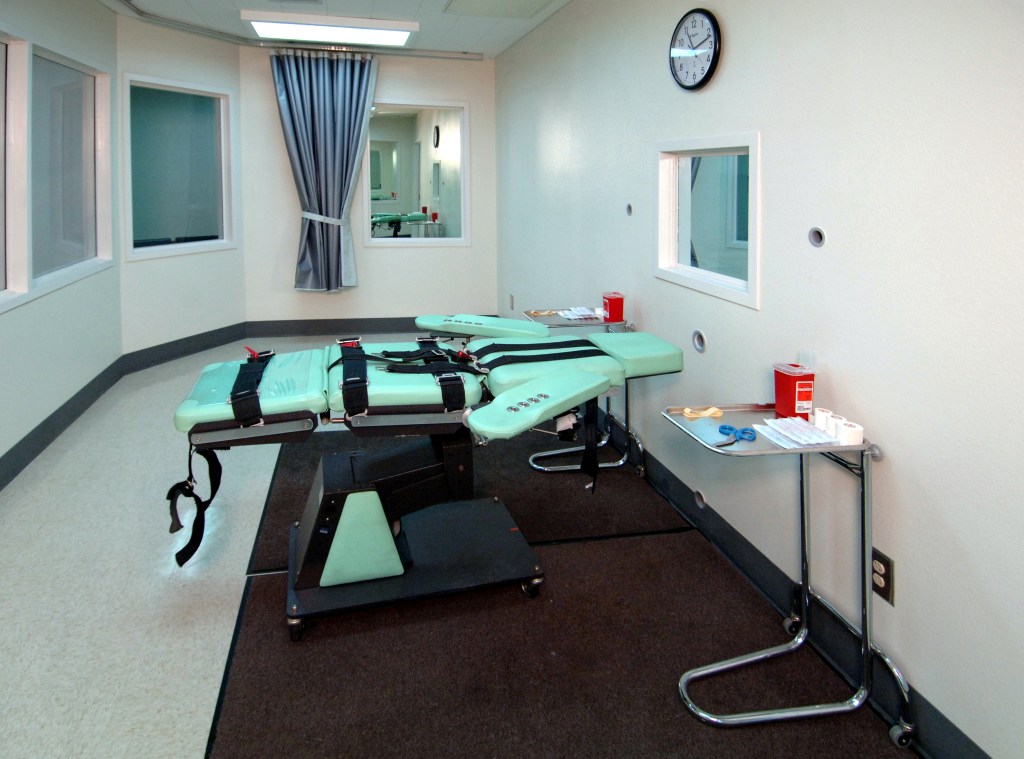
Despite these contrasting arguments, the death penalty persists as a facet of life in America and media coverage. The first major news story to break regarding capital punishment in recent weeks was the scheduled execution of Christa Pike. At 18 years old, with the collaboration of her then boyfriend and another teenager, Christa Pike murdered Colleen Slemmer in 1995. Since then, Christa Pike was the only defendant of the three teens to be sentenced to death, with her execution set to take place on September 30, 2026. As Christa Pike’s execution date neared, like most death penalty cases, it drew media attention. However, this was not the notable anecdote of this story. What sensationalized her attempted execution was that after being administered two doses of lethal injection, Pike survived.
Despite the continued prevalence of lethal injection in the U.S., execution by hanging remains the most popular method of execution internationally. Perhaps this finding is unsurprising economically, as lethal injection costs U.S. states as much as $95,000 per execution, while hangings have less overhead costs. Additionally, in the U.S., death by hanging has a botched rate of 3.12%, whereas lethal injection has the highest botched-execution rate at 7.2%.
However, the conversation surrounding capital punishment has taken an even more controversial turn, as on October 8th the Pentagon announced that it intends to livestream the execution of Nidal Malik Hasan. Hasan was sentenced to death after he killed 13 people and injured over 30 more in the 2009 mass shooting in Fort Hood, Texas. Now, his execution is set to take place on December 3rd via a firing squad. If carried out, this execution will be the first death sentence administered by the U.S. military in over 60 years. The Pentagon’s statement followed the previous comments by Pete Hegseth on October 7th that the execution would be “public and that “people are able to watch it”.
International backlash was swift following the Pentagon’s announcement and Hegseth’s statements. The United Nations (UN), already opposed to the U.S’s continued use of the death penalty, called the proposed livestream “abhorrent”. Pope Leo XIV described the proposed execution as being “inadmissible”, describing that justice has progressed beyond the need for capital punishment. This has even faced backlash from within the White House, as JD Vance has stated that he will not be tuning in to the execution’s broadcast.
The planned public execution is a bit of an anomaly on the global stage as this would be the first known livestream of a lawful execution. Public executions (not livestreamed) are also a rare occurrence. In the past year, only Afghanistan and Iran are known to have conducted these executions.
The last widely recognized public execution in the U.S. occurred in the Bluegrass State. In 1936, in Owensboro, Kentucky, Rainey Bethea (a Black man) was publicly hanged after he was convicted of raping a white woman. The audience encompassed roughly 20,000 attendees who could purchase concessions like sandwiches and Coke. Since then, the only remotely similar event has been the execution of Timothy McVeigh, which was available for broadcast only to his victims.
Ultimately, conversations and debates regarding the death penalty in the United States continue beyond country lines. As the majority of countries continue to move away from capital punishment, the U.S. remains an outlier among democratic countries. As the U.S. continues to experience botched state-administered executions and as debates continue over a livestreamed military execution, it becomes increasingly difficult for the U.S. to reconcile the dichotomy between current domestic policy and our ability to champion human rights internationally.


Leave a Reply