
By Nimi Bala
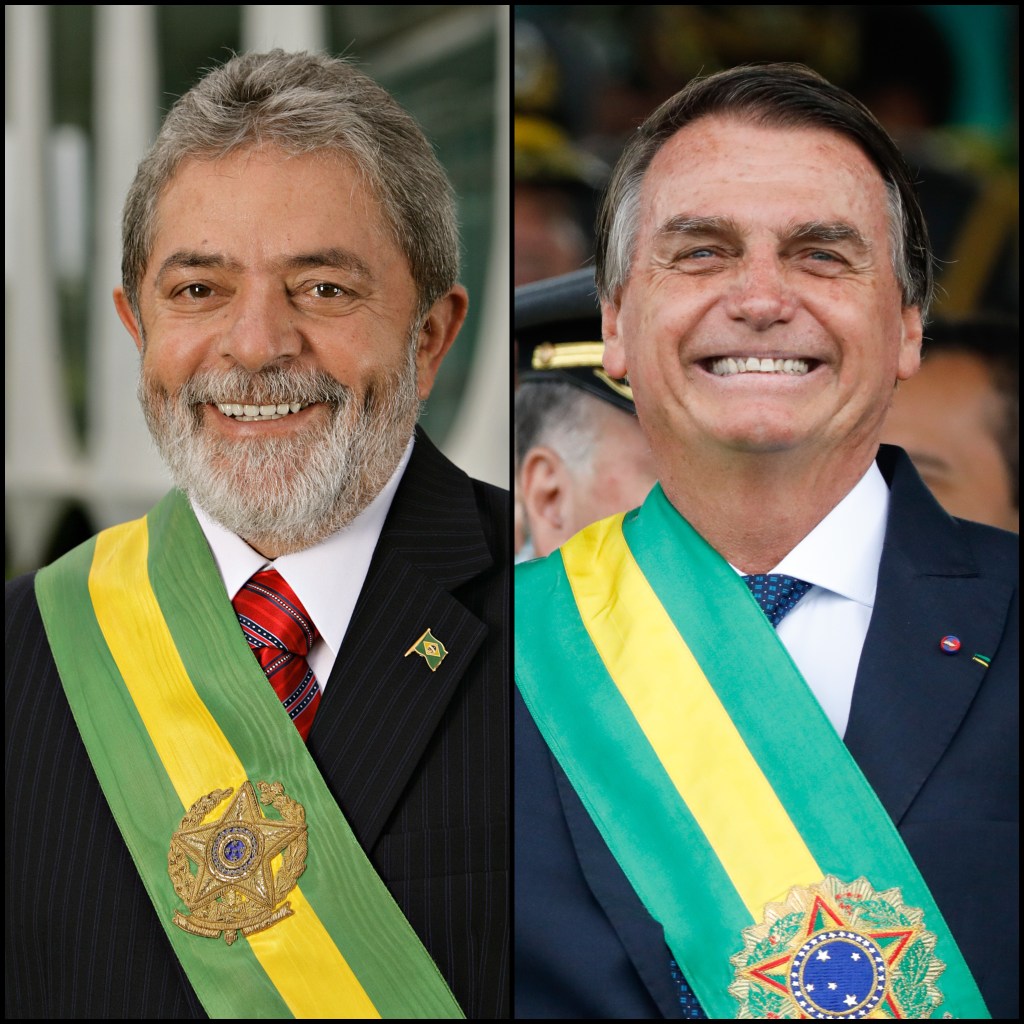
On October 4, 2026, Brazil was given a choice: would Flávio Bolsonaro or Lula de Silva become president of Brazil? This decision tasked to voters was similar to that one 4 years prior, except this time it wasn’t Jair Bolsonaro who would be running against Luiz Lula de Silva for president of Brazil; it would be Flávio Bolsonaro, Jair Bolsonaro’s son, running against Lula for the office of president of Brazil.
During the first round of elections, candidates are required to win at least 50% of the vote in order to be considered the winner of the election, and neither candidate was able to pass the 50% threshold. Bolsonaro acquired 47.03% of the vote, though Bolsonaro’s Liberal party was able to win many of the governorship elections, while Lula fell in second with 45.16% of the vote. Because none of the candidates were able to reach the required 50%, Brazil will hold a second round of elections between Bolsonaro and Lula to decide the presidency.
At the prospect of another Bolsonaro presidency, even if it is a different Bolsonaro at the helm, Brazil’s young people took to the streets in protest after the election results came in. During the protest, university students expressed their worry about what a Bolsonaro presidency would mean for people of color, women, and the LGBTQ+ community in Brazil.
This comes as the possibility of Lula winning the elections comes into question. While Lula is hoping to pull ahead of Bolsonaro in the run-off election, the numbers are currently not on his side. The candidates who came in third, fourth, and fifth place in the first round of elections were all from right-wing parties, and their voters seem poised to vote for Bolsonaro in the run-off, widening his possible margin of victory over Lula. The combined number of votes between third, fourth, and fifth place was 8 million votes, which seems likely to go to Bolsonaro and add to his 2 million lead from the first round of votes. History is also not on Lula’s side during this election. Since the redemocratization of Brazil in the 1980s, a candidate that has lost in the first round of the presidential election has not won the runoff election, and if Brazil follows this same pattern, it is very unlikely that Lula will win his fourth nonconsecutive Presidential term.
The Brazilian Presidential election has great implications for the future of alliances and great prior influence within Latin America in the coming years, because while the election may be between Bolsonaro and Lula, a third influence has entered the race: US President Donald Trump. Since taking office for a second term, Trump’s foreign policy direction within South America has been to increase US preeminence within the region, and he has so far done this by providing monetary aid to Argentina and backing several right-wing candidates running for office throughout South America, most of whom have won their respective elections. Trump hopes to strengthen the US’s grip on South America by winning Brazil through Flávio
Bolsonaro, who has been dubbed Trump’s choice in the election. University students fear that if Bolsonaro wins the election, Brazil will become a “colony of the United States.”
Both China and the US are two of Brazil’s biggest trade partners, and while whoever wins the presidency is likely to maintain relationships with both nations, the candidates themselves have preferences on which they would align with, and this could have major political implications for Brazil. Should Bolsonaro win the election, Brazil will find itself allied more closely with the United States, but should Lula win the election, Brazil would find itself allied more closely with China and would distance itself from the United States.
Brazil’s winner could also decide the future of global alliances that Brazil will find itself in. A Bolsonaro win will see a Brazil that finds itself in bilateral relationships with nations such as the United States, Israel, and Argentina. Once president, Bolsonaro has also indicated that he would reevaluate Brazil’s commitment and alliance to BRICS, which is an alliance of emerging economies looking to rival the West, while Lula would likely keep Brazil within BRICS. A continued Lula presidency would see further strengthening of relations with China, while holding on to some relation with the US, a prioritized engagement with the Global South, and a push for a multipolar international system.
A Bolsonaro win would also solidify a right-wing surge in South America. In the past 18 months, right-wing candidates have won the last 7 presidential elections in Latin America. If Bolsonaro wins the run-off, the right-wing surge will have control over the largest economy in Latin America. This would coincide with the major right-wing surge not just in Latin America, but also throughout the West. This year alone we’ve seen right-wing parties, such as Germany’s AfD, win elections and France’s Marine Le Pen of La Renaissance garner enough support to be considered a viable candidate in the upcoming French presidential election.
This global surge of the political right-wing often goes hand in hand with democratic backsliding. Democratic backsliding is when elected leaders begin to concentrate power within the executive, and there is a slow erosion of civil rights within the public. While democratic backsliding is not inherently related to right-wing parties, it is related to populist candidates, who may come from either side of the political aisle, and we currently see populist candidates rising through the ranks and onto the national stage in right-wing political parties. We’ve seen slow consolidation of executive power in countries such as Venezuela and Cuba in recent years, and many of the Latin American nations have a history of autocratic regimes taking hold of their countries before democratizing. The fear here is that this right-wing wave in Latin American politics could slowly begin to revert these democracies back into illiberal democracies or autocratic states, crushing the years of effort put in to make these nations into strong democracies.
Many will also see a Bolsonaro win as the death of Lula’s Workers’ Party. In the first round of elections, while Lula won amongst the poorest of voters, he performed poorly with the lower-middle class than he did with the rich class in Brazil. Many believe that this is because of his recent pushes for legislation that would create a six-day work week and outlaw standard contracts, which none of these issues helped gig workers or the lower middle class who were hoping for protection against violence and less red tape. Many also believe that the party has seen workers as nothing more than exploited labor.
The run-off election between Bolsonaro and Lula will be held on October 25, 2026.


Leave a Reply