
By MJ Weaver
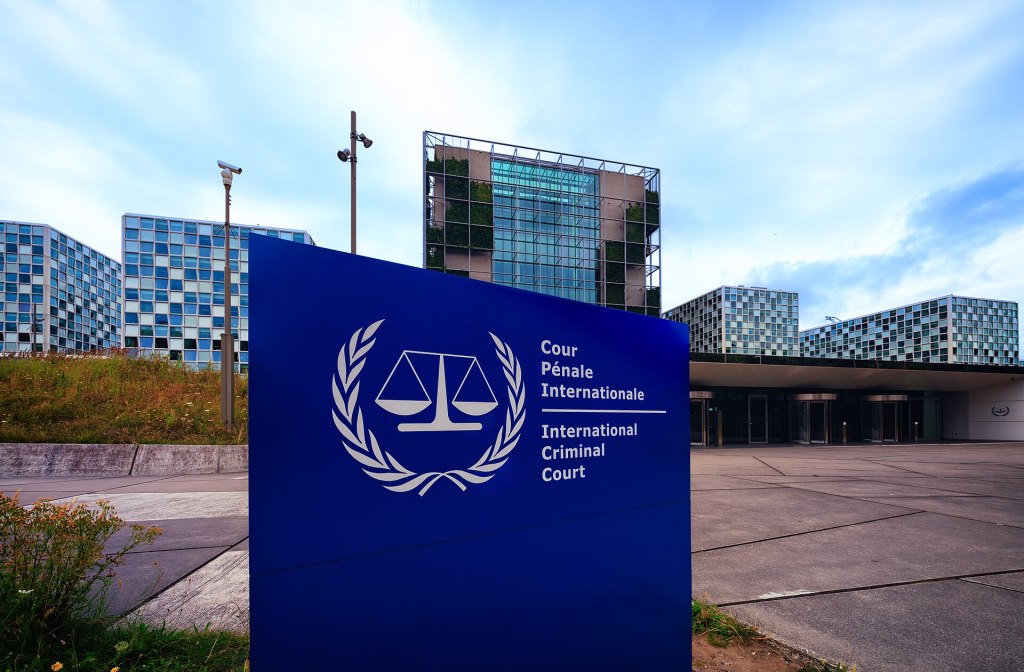
Last week, the International Criminal Court (ICC) publicly unsealed two additional arrest warrants for senior Taliban figures Mr. Agha and Mr. Nadim. Although the warrants were initially issued on September 9, 2025, they remained sealed until October 5, 2026. Their release followed the public issuance of arrest warrants for Mr. Akhundzada and Mr. Haqqani, two supreme Taliban leaders, on July 8, 2025. The ICC is accusing the four defendants of inducing or soliciting the crime against humanity of persecution, under article 7(1)(h) of the Rome Statute. Haibatullah Akhundzada is the current supreme leader of the Taliban’s Islamic Emirate and de facto authority in Afghanistan. Abdul Hakim Haqqani, a close associate of Akhundzada, is the chief justice of the Taliban Supreme Court. Habibullah Agha holds the title of Minister of Education, while Neda Mohammad Nadim is the Minister of Higher Education.
The charges arise from the period of the Taliban’s de facto rule in Afghanistan. The suspects are accused of implementing a governmental policy on behalf of the Taliban that deprived women and girls of their fundamental rights and freedoms. The policies in question restricted and denied women and girls the right to education, privacy and family life, as well as the freedoms of movement, expression, thought, conscience, and religion on the basis of gender discrimination. These policies were allegedly enforced through acts including murder, imprisonment, torture, rape, and enforced disappearance. In addition, other individuals were targeted because their behavior was inconsistent with the Taliban’s gender policies. The alleged crimes began following the Taliban takeover in Afghanistan on August 15, 2021, and continued until at least January 2025.
Legal Implications:
The Taliban’s chief spokesperson, Zabihullah Mujahid, responded to the arrest warrants by stating that the Taliban regime “does not recognize any entity called the ICC, nor does it hold any obligation to comply with its rulings.” The de facto Taliban administration rejects the Rome Statute, which Afghanistan joined before the Taliban’s return to power, and the Court’s authority, stating that it is bound only by Islamic Sharia law.
According to the ICC, Afghanistan deposited its instrument of accession to the Rome Statute on February 10, 2003, and has not officially begun the formal withdrawal process. The ICC therefore maintains that the treaty agreement remains in force and that crimes committed on Afghan territory or, where applicable, by Afghan nationals fall within its jurisdiction. The Islamic Emirate of Afghanistan led by the Taliban is not widely recognized as the official government of Afghanistan. Although there is growing international momentum toward recognizing it as the country’s official government, international legal bodies and the ICC prosecution assert that the Taliban’s de facto seizure of power and rejection of the ICC does not legally nullify the state obligations of Afghanistan under the Rome Statute.
The alleged crimes signify an important expansion of the ICC’s understanding of gender persecution. The Pre-Trial Chamber II recognized LGBTQI+ persons as victims of the alleged persecution and confirmed that gender persecution includes persecution based on sexual orientation and nonconforming gender identities. This is the first time the international tribunal has confirmed such a significant development for LGBTQI+ rights in international criminal law. The Court’s interpretation of “gender” in the Rome Statute indicates that the concept is not limited to biological differences between men and women but also encompasses the social roles, behaviors, expectations, and hierarchies traditionally attributed to people on the basis of gender.
What’s Next?
The four Taliban figures, especially senior leaders Mr. Akhundzada and Mr. Haqqani, maintain a discreet presence in Afghanistan, with few public engagements. The men are unlikely to leave the country, making it extremely difficult to execute the warrants and bring them before the Court for a pre-trial hearing. The ICC requires the accused to be physically present at trial; however, the Appeals Chamber has recently upheld a ruling concerning the confirmation of charges against Ugandan warlord Joseph Kony in his absence. This ruling may allow certain proceedings to advance even if the defendants remain at large.
It is up to ICC member states to enforce the warrants and cooperate in the arrest of Mr. Akhundzada, Mr. Agha, Mr. Haqqani, and Mr. Nadim. ICC Deputy Prosecutor Nazhat Shameem Khan stated, “The issuance of the two additional arrest warrants in the Situation of Afghanistan is a further vindication of the rights of Afghan women and girls, particularly their right to education. Education is a fundamental human right that must be enjoyed by all. Afghan women and girls deserve accountability for the severe deprivation of their rights and freedoms,” highlighting the significance of the warrants. The warrants place pressure on the international community to act and protect victims of Taliban gender persecution. They represent the first step toward holding the Taliban accountable for the systematic oppression of women, girls, their allies, and gender-nonconforming individuals through violence and systemic injustice.


Leave a Reply