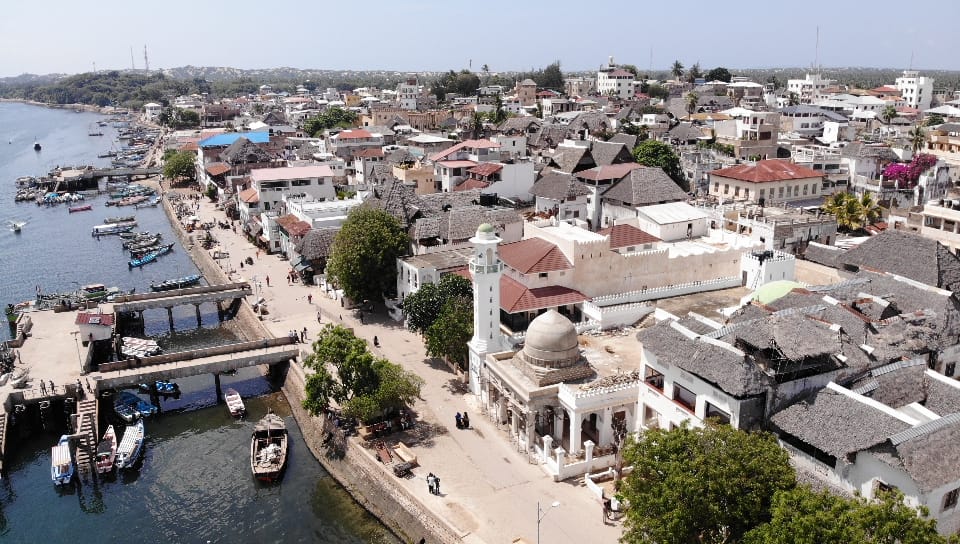
Almaddy2022, CC BY-SA 4.0 https://creativecommons.org/licenses/by-sa/4.0, via Wikimedia Commons

By Brooke Bihl
Five African heads of state have broken ground to begin the construction of a $16 billion oil refinery in Kenya, which is expected to significantly boost the continent’s production of the commodity. Prominent African leaders who attended the ceremony include Kenya’s President William Ruto, Ugandan President Yoweri Museveni, and Ethiopian Prime Minister Abiy Ahmed. Located in the coastal town of Lamu, construction is projected to last around 40 months and, once finished, is expected to process around 700,000 barrels of oil per day. Overseeing the project is African billionaire Aliko Dangote, whose company, Dangote Group, will coordinate the construction and owns high stakes in its development. As owner of a 700,000 barrel-per-day oil refinery in Nigeria, Dangote states his ambitions for matching this domestic production by ensuring East Africa becomes more self-sufficient through reducing imports of refined fuel. “For too long, our continent has actually been rich in resources but poor in value creation and addition. We have exported crude oil and imported refined products. Such practice only leads to us exporting our jobs and opportunities that should remain on the continent and leads us into importing poverty into our nations. Africa cannot build lasting prosperity by exporting what it has and importing what it needs,” Dangote said at the groundbreaking ceremony.
The facility will serve both markets within Kenya and around Sub-Saharan Africa, including countries such as Tanzania, Rwanda, Burundi, South Sudan, Ethiopia and the Democratic Republic of Congo (DRC), but will mostly rely on receiving crude oil from neighboring countries such as Uganda. It is projected to be slightly larger than Dangote’s refinery in Nigeria, which has now reached full capacity after beginning operations in 2024. During the ceremony, Kenyan president William Ruto said the refinery would support industrialization while creating about 60,000 jobs for the region, in addition to generating business in fertilizers, chemicals, and packaging. “The refinery is like actually the gate. Once you open up, you have the refinery. You’ll be shocked at how many people will now come and invest in Kenya,” Dangote said during Ruto’s visit to the site.
Dangote has created high hopes for foreign and domestic investment into the new project, stating that American investors “will definitely come”, citing the significant U.S. backing for his previous African projects. This financing plan coordinates with Dangote’s expansion of the Nigerian refinery, which reported net profit of $1.82 billion for the first half of this year and is raising capital through the company’s initial public offering (IPO). However, the African billionaire placed a direct emphasis on African investment, stating his projects are intended to give ordinary people an opportunity to own part of the business. This comes after stating that the Lamu refinery could be directly funded through internal cash flow, IPO’s, and a possibility for three East African countries to take a combined 30% equity stake.
However, the refinery is also facing local obstacles that threaten the completion of the project after local environmentalists voiced concerns about the damage it could bring to Lamu Old Town, a UNESCO World Heritage Site which also contains a fragile and unique ecosystem. In addition, local Lamu residents have brought a case to the Kenyan High Court over land ownership rights of the refinery site, saying the area remains a part of their ancestral heritage. Following the ground breaking ceremony, the High Court ruled that construction may continue while legal proceedings unfold, bringing significant drawbacks and a series of protests from Lamu residents. Despite these hindrances, the economic impact this refinery promises to bring to both the Kenyan economy and the region outweighs the potential obstacles currently presented. In 2025, Kenya imported 5.5 million tons of petroleum, rising around 12% from 2024. This heavy dependence on imported petroleum products has only deepened, as demand rose 9.9% within the last year. This project, along with the completion of a 1,000 MW power plant, promises to significantly reshape Eastern Africa’s infrastructure landscape by reducing its reliance on imported finished fuel through processing and distribution. In addition, growing geopolitical conditions across the continent, the U.S.-Iran War, and disruptions across the Strait of Hormuz have exposed the vulnerabilities of fuel-importing countries, creating a prime opportunity for the refinery to reduce exposure to supply shocks, shorten supply chains, and improve stock security. Ultimately, the refinery’s wider significance lies in the possibilities of measurable improvements in prices, reliability, and livelihoods across the wider Sub-Suharan Africa region.


Leave a Reply