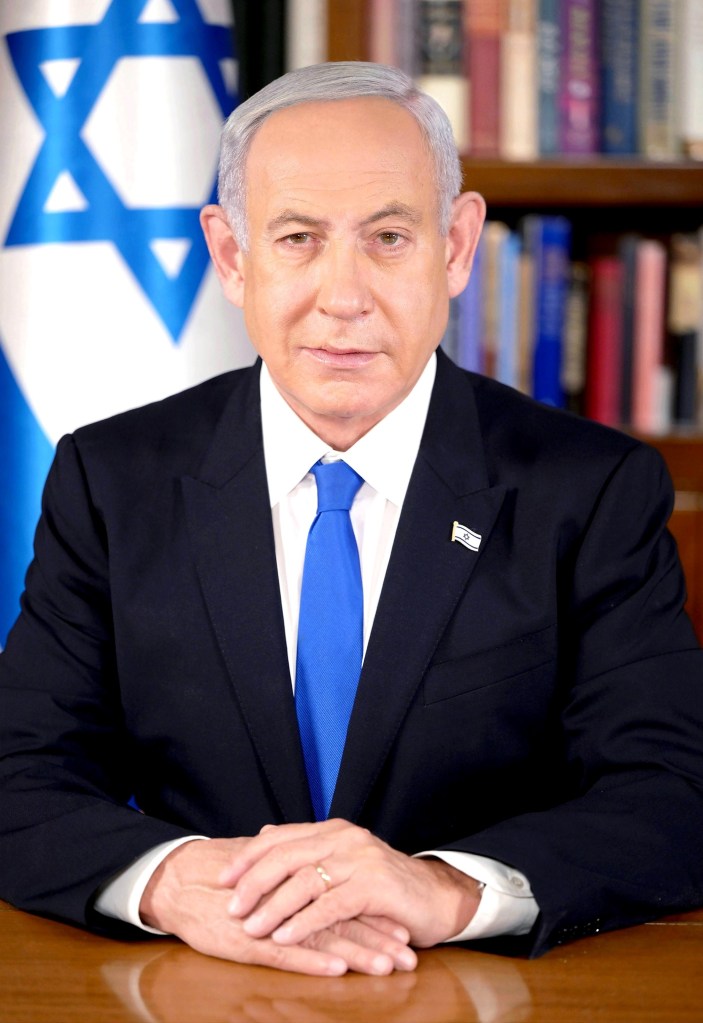
Avi Ohayon / Government Press Office of Israel, CC BY-SA 3.0 https://creativecommons.org/licenses/by-sa/3.0, via Wikimedia Commons

By Mia Durham
On October 27th, Israelis will have their first national election since the Hamas-led terrorist attack on the state on October 7, 2023. It is also the first time that the Knesset has completed a full four-year term since 1988, making Benjamin Netanyahu Israel’s longest serving prime minister. This gives the people of Israel their first chance to deliver their opinion on the leadership since the beginning of the Israeli-Palestinian conflict. Netanyahu has made the idea of national security the centerpiece of his campaign and presents the case that he and only he can keep Israel safe.
This is an argument that has been increasingly difficult to make as the state just hit the three year anniversary of the beginning of war in Gaza, Lebanon, Yemen, and Iran. Netanyahu has had difficulty producing decisive victories in any of these conflicts, weakening his image as the protector of Israel. His main challenger is not a peace candidate from the left, but a former IDF chief of staff, Gadi Eisenkot. His centrist Yashar party is now head to head with Netanyahu’s traditional right-wing Likud party. Both parties are based on the security of the state; therefore, the outcome is more dependent on which vision of Israeli security the people trust more. This is a consequential decision as it will decide the future of whether Israel will continue Netanyahu’s open-ended “seven-front war” centered on Tehran or whether the security strategy will take a more limited turn.
The polls have been showing how truly unsettled this race is. When asked who is better suited to be prime minister, Eisenkot was picked 46% of the time while Netanyahu was picked 40% of the time. However, the party numbers change depending on the pollster, and since Israelis vote for parties and not prime ministers, finishing first is not the goal of these party leaders. The goal is to build a coalition of 61 seats, and then the party that is able to do this will run the government. Netanyahu arguably has the easier path since he has a clear far-right and ultra-Orthodox backing. Eisenkow will have a harder time trying to bring together parties from the right, left, and center, as well as maybe even the Arab parties.
The Iran war is one of the most influential factors deciding the result. The war is still ongoing, but the joint Israeli-U.S. attack did not achieve the swift victory as it had hoped. The war is seven months in, and Eisenkot is using this war to argue that a new security vision is what the conflict needs. While Netenyahu has room to argue that only he can finish this job. 63% of Jewish Israelis think that continuing the war is crucial for the security of Israel. Therefore, watching what happens between the U.S., Iran, and Israel over the next two weeks could be a swing factor for the election day results. Netanyahu is also under pressure over the exemption of ultra-Orthodox men from military service. This has been a key point of contention over the past three years. Netenahyu needs the ultra-Orthodox parties to be reelected; this could also be a risk factor for his own coalition.
Policy Implications
A new Eisenkot government would not be dovish, but it would change how Israel approaches Iran and the other faces of the conflict. It could be a shift away from the endless war approach. This new government could also be expected to refocus on U.S. diplomacy and be a partner to Washington that would allow for an easier path to a deal on the Strait of Hormuz.
Similarly, under Netanyahu and his far-right coalition, Gaza is likely to remain a continuous war with no end in sight. A new government could give hope to settle the dispute through diplomacy and a possible U.S. brokered ceasefire.
Finally, the most likely outcome, since the race is so close, is that there will be no clear result. If neither side reaches 61 seats, the race could lead to long coalition talks or another election. During this process Netanahi would stay on as the prime minister of Israel. Regardless of the result, the world should not expect swift policy changes.


Leave a Reply