
By Brooke Bihl
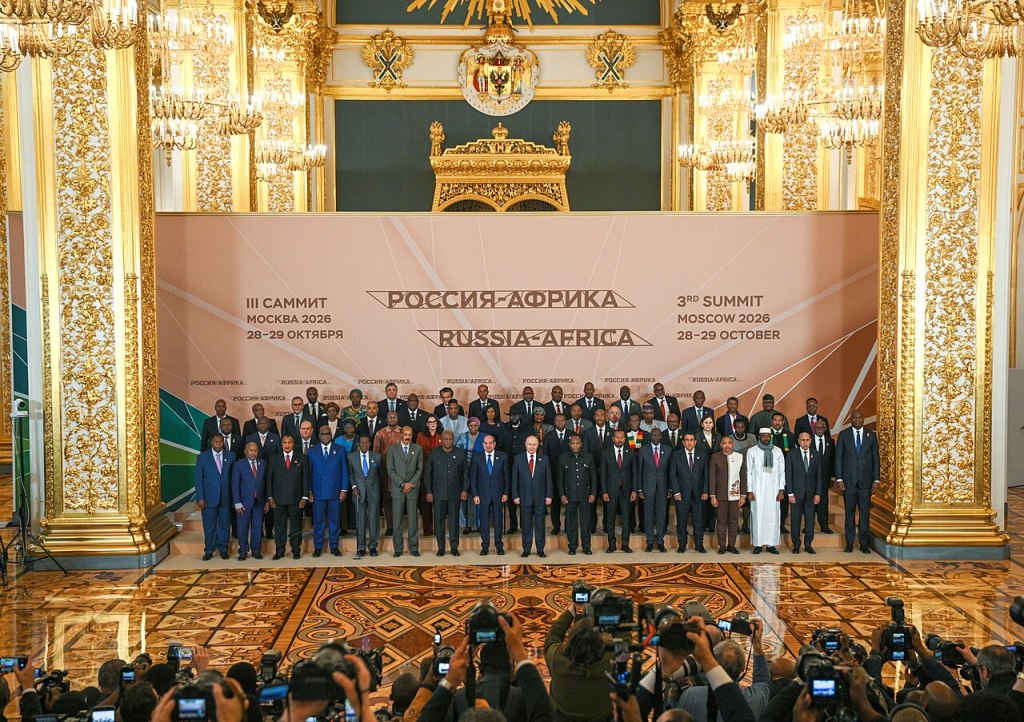
Moscow hosted its third African-Russian Summit during the end of October, furthering efforts to spread its influence across the continent. Taking place over a course of two-days, delegations and heads-of-state from 48 African countries gathered in the Russian capital to bolster relations and converse on topics such as security, trade, defense, and technology. The diplomatic meeting was chaired by Russian President Vladimir Putin and the current African Union chair, Burundian President Evariste Ndayishimiye. Now marked as the third high-profile forum of its kind, with the first summit occurring in 2019, this meeting indicates an unprecedented turn in Russian-African relations within just seven years. The event’s official theme is Developing Mutually Beneficial Cooperation and “unlocking the potential of every African country.” It includes more than 40 sessions with around 100 speakers that will cover additional topics such as food and energy security, healthcare, and youth exchange services. During the first day of the summit, President Putin mentioned Russia’s strengthening relations with the continent, calling it Africa’s best partner and ordering an end to Western domination. “The era when the destinies of entire continents were determined by a narrow bloc of states is coming to an irreversible end. It is being replaced by a more just world, in which the voices of all nations participating in international affairs must be heard,” said Putin.
Russian-African Relations
With initial Russian ties to the African region beginning during the Soviet era, Moscow has looked upon the continent as a counterweight to what it sees as Western dominance over international affairs. Growing development throughout Africa and its increasing importance on the international stage has brought converging superpowers vying for prominence within the region. Russia particularly has gained a significant amount of influence through spheres such as security, energy, mining, investment, and industrial cooperation. Diplomatically, Moscow has also expanded its network of embassies around the region, bringing its total to 49, and even offering to act as a mediator for conflicts within the Horn of Africa. During the previous summit in 2023, the Wagner Group, a Russian paramilitary force, operated within a limited number of states. Today, Moscow has become the dominant external force in the Sahel region of Africa, with reports noting Russian missions or troop presence in at least nine countries, those most notable include Mali, Niger, and Burkina Faso. Among the leaders Putin is scheduled to meet include prominent leaders of these three Sahel countries, as well as Egyptian President Abdel Fattah el-Sisi and Ethiopian Prime Minister Abiy Ahmed.
In addition to security assistance, Russia has placed one of its strongest hands in energy and nuclear power assistance, where the Russian-owned firm Rosatom has signed agreements and furthered talks to construct nuclear power plants across four African states. Trade and additional market supplies for agricultural items such as fertilizers, have also bolstered relations between the two. In 2025, bilateral trade exceeded $27 billion, while Russian exports of mineral fertilizers reached around 1.5 million metric tons, and have already surpassed 2.2 million metric this year. “Our business community approaches cooperation with African partners with honesty, respect, and integrity, conducting business on an equal footing. Rather than siphoning off profits in the manner of the colonial practices by former imperial powers, they reinvest their earnings into the development of your national economies, they readily share advanced technologies and expertise, broadly engage local subcontractors, and help create new production facilities and jobs,” Putin said.
Global Implications
While this summit is unlikely to produce significant immediate breakthroughs for neither Russia nor the African region, it rather acts as a tangible event in which an ever-growing presence of Russian influence across the continent has become more prominent. Moscow retains clear advantages and motives through this relation, including a shift away from the West and additional political, economic, and security options. Africa though remains in a delicate position balancing increasing competition between global powers attempting to assert influence within the region and choosing whether the resulting partnerships remain beneficial. For the continent, an alliance with Russia holds vital opportunities in key interests such as trade, security, and a greater representation within international forums. However, like other countries with Russian affiliations, African relations with the Kremlin have been made more complex due to the ongoing war in Ukraine. Most prominently, African citizens have become some of Russia’s largest targets for military recruitment in the war, causing national outrage among citizens in states across the region, particularly Kenya and South Africa. Ultimately, the summit largely indicates the great scale of Moscow’s ambitions and Africa’s ability to retain leverage and advantages from the growing partnership.


Leave a Reply