Md. Jamal / VOA, Public domain, via Wikimedia Commons

By MJ Weaver
In Gambia v. Myanmar, the International Court of Justice (ICJ) issued a landmark ruling finding Myanmar responsible for the genocide of the Rohingya people. On November 19, 2026, the Court ruled by a 9–6 majority that Myanmar had committed genocide under the 1948 Genocide Convention during and after its 2017 military clearance operations in northern Rakhine State. The period of intense military violence resulted in the deaths of more than 10,000 people. Gambia brought the case against Myanmar in 2019 with the support of 11 other countries. The ICJ’s decision marks a historic milestone, as it represents the first time a state has been held responsible for genocide by the Court.
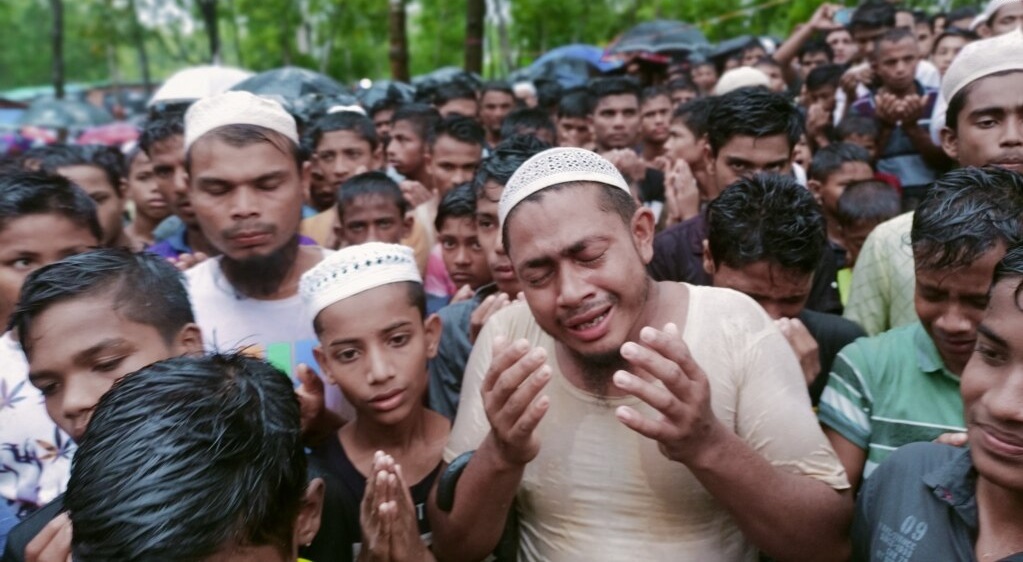
The Rohingya are a Muslim ethnic minority group that has lived in Myanmar for centuries. In 1982, Myanmar’s military regime denied the Rohingya citizenship, leaving more than 1.8 million people stateless and contributing to one of the world’s largest stateless populations. Since then, the Rohingya have faced severe persecution, including segregation and displacement. These conditions culminated in the 2017 “clearance operations,” when Myanmar security forces carried out mass killings, widespread sexual violence, and the burning of hundreds of villages. The northern state of Rakhine was the primary target of the operations and experienced the destruction of nearly 1,000 villages. These atrocities triggered a humanitarian crisis and forced hundreds of thousands of Rohingya to flee Myanmar in search of refuge in neighboring countries. Most sought asylum in Bangladesh.
As a state party to the 1948 Genocide Convention, Myanmar was found responsible for committing acts of genocide defined under the Convention as acts committed with intent to destroy, in whole or in part, a national, ethnical, racial, or religious group. The ICJ reached its decision by a majority vote, with six judges issuing dissenting opinions. As the first state held responsible for genocide by the Court, this case establishes precedent for the interpretation of genocidal intent (dolus specialis). In the wake of Gambia v. Myanmar, international attention has turned toward South Africa v. Israel, the case alleging that Israel has committed genocide against the Palestinian people in Gaza. The ICJ’s ruling indicates that genocidal intent can be inferred from patterns of evidence rather than from spoken or written orders. In addition to the genocide proceedings against Israel before the ICJ, Israeli Prime Minister Benjamin Netanyahu was issued a warrant for arrest by the International Criminal Court (ICC) for alleged war crimes in Gaza. Although neither Israel nor Myanmar is a state party to the ICC, these cases raise important questions about the potential for criminal accountability. They highlight the possibility of future ICC prosecutions against Myanmar’s military officials who orchestrated the campaign.
The ICJ ordered Myanmar to cease any ongoing violations of the Genocide Convention and take all necessary measures to investigate individuals involved in the crimes. The Court’s ruling also requires that Myanmar establish and implement a plan of reparation and restitution for the Rohingya within the next two years. However, Myanmar’s ability to comply with the Court’s orders remains uncertain. In 2021, the Tatmadaw, Myanmar’s military, staged a coup and seized control of the government. The aftermath triggered a civil war that has intensified the country’s internal instability. These ongoing conditions have cast doubt on Myanmar’s willingness and ability to comply with the ICJ’s ruling and meet its obligations regarding reparations. Consequently, enforcement of the ICJ’s decision may depend heavily on the international community. The UN Security Council could potentially authorize measures, including peacekeeping operations, to support compliance with the Court’s ruling. Russia and China, both of which maintain close relationships with Myanmar’s military government, hold veto power on the Security Council. Their opposition could therefore prevent meaningful international action.


Leave a Reply