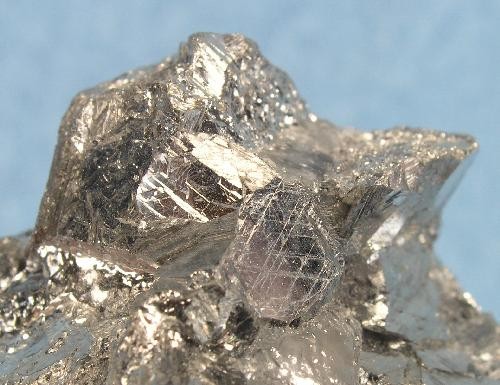
Rob Lavinsky, iRocks.com – CC-BY-SA-3.0, CC BY-SA 3.0, via Wikimedia Commons

By Madelyn Linet
As demand for critical minerals continues to shape geopolitical competition and international trade, the United States has begun strengthening ties with various nations. On 18 November 2026, Tajik President Emomali Rahmon met with U.S. Deputy Secretary of State Christopher Landau in Dushanbe, Tajikistan. This meeting was part of a larger trip that also included visits to Türkiye and Turkmenistan. Discussion topics ranged from mining cooperation to technology to trade and investment. The meeting comes as the United States seeks to diversify its mineral supply chains and expand partnerships with countries that possess important resources. The discussions reflect growing interest in Tajikistan’s mining sector and raise questions about how U.S. investment could help change Tajikistan’s position in the global mineral market.
Why Antimony Matters
Historically, antimony has been used to strengthen and harden certain metals. Today, it serves a variety of industrial applications including battery technology, night vision goggles, defense-related manufacturing, flame-retardant materials, and others. Although antimony is not as widely discussed as other critical minerals such as rare earth elements and lithium, it remains an important material for industries that are reliant on specialized metals.
The United States is heavily dependent on foreign suppliers for antimony. In 2025, the net import reliance of the United States on foreign suppliers was estimated at 91%, suggesting that the U.S. domestic supply is extremely vulnerable to disruptions or changes in international markets. Antimony prices have also risen considerably, reaching an average of $25 per pound in 2025, more than twice the 2024 average. According to the United States Geological Survey (USGS), China’s export restrictions contributed to supply shortages and rising prices for U.S. consumers. Although China temporarily suspended its ban on antimony exports to the United States in November of 2025, the suspension is scheduled to expire on 27 November 2026. The uncertainty of these restrictions remains an important reason why the United States has looked to other countries as sources of production.
Tajikistan’s Position in the Global Mineral Market
Tajikistan is one country that offers the United States an opportunity to diversify its sources of antimony. In 2024, Tajikistan produced approximately 22,000 metric tons of antimony, accounting for an estimated 18% of global production. This level of production made Tajikistan one of the world’s leading antimony producers in that year. Despite its significant production capacity, 100% of Tajikistan’s antimony ore and concentrates were exported to China in 2024. Other forms of antimony, however, reached different markets including France, Türkiye, and Belgium.
Tajikistan’s mineral sector already includes both foreign and state-owned operations. Comsup Commodities Inc., a U.S.-based corporation, operates the Jijikrut antimony-mercury mine through its wholly owned subsidiary, Anzob LLC. The Konchoch gold-antimony processing complex, meanwhile, is 50% owned by Tajik Aluminum Company and 50% owned by China’s Tibet Huayu Mining. The presence of the United States and other foreign entities in Tajikistan’s mining sector is not new. The recent diplomatic discussions could provide an opportunity to further build on this existing commercial involvement.
What Tajikistan Stands to Gain
For Tajikistan, potential mining cooperation with the United States could provide an opportunity to further expand an important sector of its economy. U.S. investment could help develop mining operations, introduce newer technology, create new jobs, and improve Tajikistan’s ability to compete in international markets. Rather than relying on the exportation of raw materials, developing domestic processing capabilities would allow Tajikistan to benefit more economically from its exports of antimony.
Expanding partnerships could also provide Tajikistan with additional economic relationships beyond its already established trading partners. China remains a major presence in the country’s mineral sector, and its role in antimony trade is particularly important. However, developing relationships with U.S. companies could give Tajikistan additional opportunities for investment and access to international markets. This diversification would not entail the complete separation from China, but rather the opportunity for Tajikistan to acquire more options for developing its mining industry and trade relationships.
Looking Ahead
As the United States looks to reduce its dependence on concentrated mineral supply chains, Tajikistan could become a more significant economic partner. U.S. interest in Tajik antimony was previously raised during discussions between Tajik President Emomali Rahmon, U.S. Special Envoy Sergio Gor, and Senator Steve Daines in September. The meeting on November 18 suggests that interest in mining cooperation has continued beyond those initial discussions. However, turning that interest into a lasting economic relationship will depend on whether diplomatic engagement translates into investment, infrastructure development, and long-term agreements.


Leave a Reply