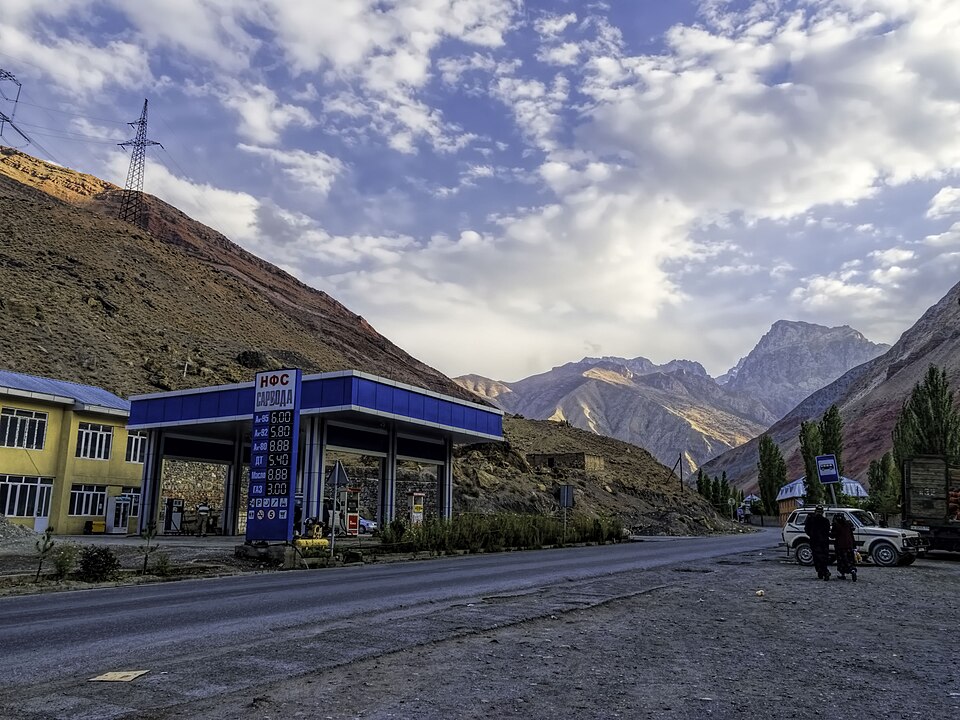
Dan Lundberg, CC BY-SA 2.0 https://creativecommons.org/licenses/by-sa/2.0, via Wikimedia Commons

By Madelynn Linet
For decades, Russia has remained one of Central Asia’s largest suppliers of oil and petroleum products. However, recent disruptions to Russia’s oil-refining industry and the introduction of restrictions on fuel exports have exposed the risks of high dependence on Russian energy supplies. Russian efforts to protect its domestic fuel supply paired with Ukrainian attacks on Russian energy infrastructure have disrupted the flow of diesel and other petroleum products to neighboring countries. In comments to reporters at the United Nations headquarters, Ukrainian President Volodymyr Zelensky mentioned he would halt strikes on Russian energy facilities if Russia agreed to stop targeting Ukraine’s energy systems. The effects of the Russia-Ukraine conflict have extended beyond Russia and Ukraine, affecting fuel supplies across Central Asia. Among the Central Asian countries affected, Kyrgyzstan and Tajikistan have faced particularly visible challenges. These disruptions highlight the risks of Kyrgyzstan and Tajikistan’s heavy reliance on Russian fuel supplies and expose vulnerabilities in the region’s energy security. As a result, Central Asian countries have started considering alternative suppliers.
Kyrgyzstan is one country that is very vulnerable to these changes in the supply chain, with Russian imports accounting for about 90% of the country’s fuel. Recent disruptions have pushed the government to seek alternative fuel sources, including from Kazakhstan, Uzbekistan, Belarus, Turkmenistan, and Iran. However, many of these alternatives still rely on Russian transit routes to reach Kyrgyzstan. Several potential suppliers have also turned to restricting exports of petrol and diesel due to rising domestic and regional demand, limiting Kyrgyzstan’s options for diversification. On September 23, 2026, Kyrgyzstan’s Deputy Chairman of the Cabinet of Ministers Erlist Akunbekov met with executives from China National Petroleum Corporation (CNPC) and Sinopec, two of China’s largest state-owned oil and gas companies. The discussions of these meetings focused on the building of oil storage facilities near the Chinese border, the exploration and development of oil fields, and the possible construction of a pipeline to transport petroleum products across the Kyrgyz-Chinese border. The push to diversify fuel supplies also reflects a broader strategy by Kyrgyzstan to maintain economic ties with multiple major powers. While Russia remains a close economic partner, Kyrgyzstan has expanded ties with Europe, the United States, and China within the last few months. These relationships will only continue to become more valuable as Kyrgyzstan remains dependent on imported energy and foreign transportation routes.
Tajikistan faces a similar energy security issue due to its dependence on Russian fuel. During the first half of 2026, Russia accounted for 91.1% of Tajikistan’s petroleum-product imports. In early July, Tajikistan experienced diesel shortages at filling stations, rising gasoline and diesel prices, and limits on the amount of diesel customers could purchase. Tajikistan responded by increasing fuel imports from Kazakhstan, Uzbekistan, and Turkmenistan, while also seeking additional supplies from Iran. However, these countries have not been able to quickly replace the volume of fuel supplied by Russia. Similar to Kyrgyzstan, Tajikistan also faces limitations in domestic production. The Dangara Oil Refinery, a major Tajik refinery, was built and commissioned with Chinese investment in 2018. It has struggled to operate consistently due to long-standing shortages of raw crude materials and a lack of secure supply agreements. Tajikistan’s efforts to secure fuel from Iran and other regional suppliers show the country’s attempt to diversify its energy sources, but limited domestic production and infrastructure make reducing its dependence on Russia a long-term challenge.
Recent disruptions in Russian fuel exports show that Kyrgyzstan and Tajikistan’s dependence on Russian fuel is more than an economic concern. When supplies are disrupted, security vulnerabilities are created. The shortages experienced by these two countries over the last couple of months demonstrate how quickly problems in Russia’s energy sector can affect countries across the region. If similar disruptions are to continue, Kyrgyzstan and Tajikistan may face greater pressure to secure long-term supplies from China, Iran, and other regional partners. For now, the situation remains closely tied to developments in Russia. However, the coming months will determine whether Kyrgyzstan and Tajikistan’s search for alternative fuel sources becomes a temporary response or leads to lasting changes in their energy security and diplomatic relationships.


Leave a Reply