Wilfredor, CC BY-SA 3.0 https://creativecommons.org/licenses/by-sa/3.0, via Wikimedia Commons
By Nimi Bala
Nine months after Nicolás Maduro was removed from office as Venezuelan President, Venezuela will hold a presidential election. This comes after the interim-president, Delcy Rodríguez, stated at the UN General Assembly meeting on September 22 that there will be a presidential election held, though she did not specify a date for when the election would be held. Rodríguez was catapulted to the Presidency after former Venezuelan President Nicholás Maduro and his wife, Cilia Flores, were captured and taken to the Metropolitan Detention Center in Brooklyn, New York. Maduro and Flores have both been charged with US federal charges of narco-terrorism and drug trafficking.
Following the arrest of Maduro, the Venezuelan high court issued an order stating that Rodríguez, who had served as Maduro’s Vice President since 2018, would take up the mantle and role of the interim President of Venezuela. Rodríguez had overseen Venezuela’s oil-dependent economy and Venezuela’s intelligence services during her tenure as Vice President. Donald Trump stated that Rodríguez would be “essentially willing to do what [the US thinks would be necessary to make Venezuela great again,” after Rodríguez had been named interim President.
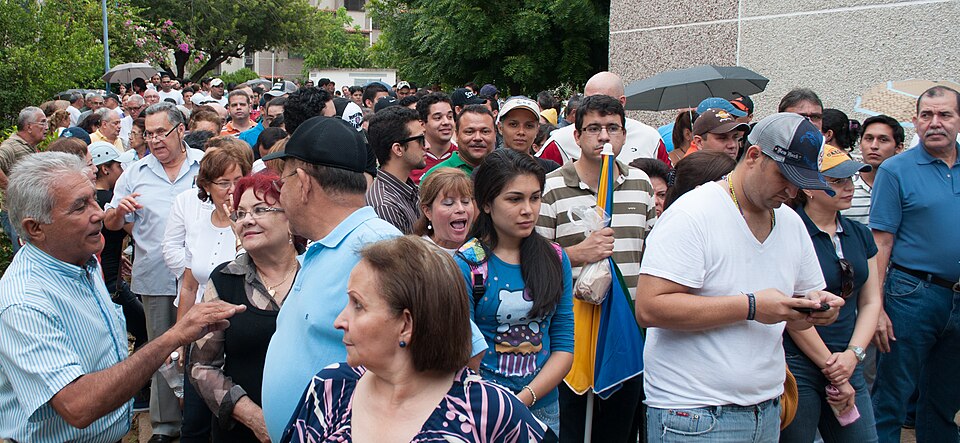
Protesters gathered outside the UN Headquarters to protest Rodríguez’s participation in the General Assembly meeting. The protesters stated that they wanted the international community to see the Venezuelan people’s “total rejection of Delcy Rodríguez and the normalization of relations with her as the country’s leader,” by the international community. The protesters went on to say that “[they] do not recognize her, [they] do not want her,” and that they hope that the international community present at the UN General Assembly would “pressure her to hold elections in Venezuela as soon as possible,” which Rodríguez did end up doing during her speech to the Assembly. Those who attended the protest stated that they wanted free and “fair elections to be held which [they] haven’t had in more than 20 years,” and that they want “everything that comes with democratic government: improvements of services, quality of life, and wages.”
The promise to hold a presidential election comes after Rodríguez met with US President Donald Trump just days before her speech at the UN. The leaders met for the first time in person since Rodríguez became the interim president. Other notable US officials, such as US Secretary of State Marco Rubio, were also in attendance during the meeting. Rodríguez states that the pair discussed “advancing a cooperation agenda in strategic areas such as energy, mining, and security.”
Free and fair elections have great implications for Venezuela’s political future. Venezuela has had a history of going back and forth between dictatorship and democracy, with their most recent period of authoritarianism beginning with the presidency of Hugo Chavez and continuing on through Maduro and now Rodríguez. By holding truly free and fair elections, Rodríguez has the power to turn Venezuela into a democratic nation and the chance to build and strengthen democratic institutions within the country.
A democratic Venezuela also be the beginning of a new democratic wave. In the last decade, due to an increase in globalization and its effects on domestic publics, populist candidates and parties have steadily begun to rise into power, and many have also begun to slowly chip away at democratic institutions within their countries. With the new, free, and fair elections being held in Venezuela and the hope for a democratization of Venezuela, this could be the start of a reversal towards democracy and the pushback needed to quell the populist and authoritarian rise we have seen in the last decade or so.
This promise of elections could also be signaling a shift in Venezuela’s alliance and the desire for Venezuela to align itself more with the United States. Venezuela and the US have recently signed an agreement that gives US oil companies a 100-year concession over ground 17 Venezuelan oilfields and gives the US control of upwards of 65 billion barrels of oil. Donald Trump touted that this agreement gave Venezuela and the US control of more than 60% of the world’s oil, and called it the “biggest oil deal in history.”
By allowing the US to take control of much of Venezuelan oil, Venezuela can be seen as trying to align itself more politically with the US. This alignment with the US could help Venezuela receive more foreign aid from the US and possibly help bring stability to the Venezuelan economy. The US will also now have a stake in what happens in Venezuela and Venezuelan elections as an US friendly Venezuelan government will allow for the oil agreement to stand with the US, which could also lead to increased US influence in the country as they would prefer to have a democratic leader in charge.
By promising to hold presidential elections, Rodríguez has opened the door for Venezuela to be transformed both politically and economically, and has allowed hope to flourish amongst the Venezuelan people that they have a chance to change their country and the quality of their lives.


Leave a Reply