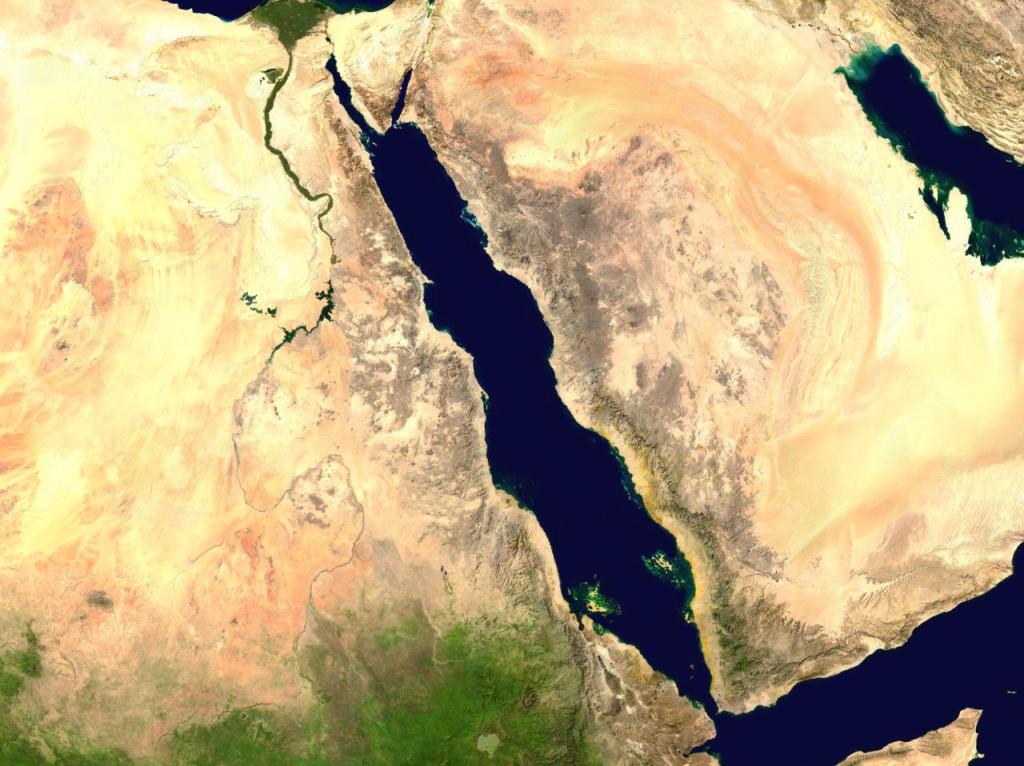
File:Red Sea 37.95521E 21.41271N.jpg. (2026, February 19). Wikimedia Commons. Retrieved September 28, 2026, from https://commons.wikimedia.org/w/index.php?title=File:Red_Sea_37.95521E_21.41271N.jpg&oldid=1168454132.

By Mia Durham
In February of 2026, the United States and Israel led a joint attack against Iran, sending much of the world’s attention to the critical economic chokepoint of the Strait of Hormuz, which has been closed since the beginning of the conflict. Meanwhile, throughout the Iran-U.S. conflict, we had heard little action from the Houthi rebels; the Iranian-backed militia who reside in Yemen. That ended on September 4th of this year when the rebels launched an offensive targeting government buildings and personnel belonging to the internationally recognized Yemeni government, in an attempt to gain control over crucial points along the Red Sea. With the United States’ full focus residing in Iran, the Houthis took advantage of being on the periphery of focus. By September 10th, the Houthis seized the Red Sea Port of Mocha, creating a second and consequential chokepoint of the Bab al-Mandab Strait. This strategic offensive was able to turn a civil war into a new front of the Iran conflict, threatening critical shipping lanes and the economic standing of our allies in the region.
Since the Strait of Hormuz has been closed, Saudi Arabia has been forced to reroute the shipping of crude oil to Yanbu, its Red Sea export hub on the west of the nation. This avoids the Strait of Hormuz and allows for Saudi oil to get to its Asian buyers, but these tankers still must pass through the Bab al-Mandab Strait. Now the Houthis have control over this strait and have been banning Saudi ships from passing, which is extremely dangerous for not only for the Saudi economy, as approximately 70% of its oil passes through, but for the global oil markets as a whole. Onshore, the Houthis have been conducting strikes against Arnaco facilities and struck an East-West pipeline, causing global oil prices to rise to over $100 dollars a barrel. This offensive not only helps the Houthis gain leverage in the civil war and against their long-time adversary, Saudi Arabia (which is backing the Yemen government and military), but it also strengthens Iran’s position against the United States. Tehran’s leverage over the Strait of Hormuz has begun to falter, but now the United States’s focus will be spread thin, and the conflict has widened.
So far, Washington has chosen to stay out of the conflict. Riyadh has asked Washington to strike the Houthis directly, but Washington is weary of starting a new front in the war. Instead, the United States met with Houthi representatives in Oman, where they promised U.S. ships safe passage and said they were committed to the 2025 ceasefire. This could raise tensions with Saudi Arabia and other allies as the United States is leaving them exposed. Saudi Arabia has turned to its strongest allies: Turkiye and Pakistan, solidifying a new mutual defense pact. Although this provides security, the coalition is not fully realised and has yet to take any concrete or tactical action. The Houthis are not simply following Iran’s orders; it is a movement with its own goals and adversaries. The control over the strait is a response to the Saudi blockade and violations of their 2022 truce.
Policy Implications
The Houthi offensive against the Bab al-Mandab should not be treated as a separate problem from the Strait of Hormuz. The lack of control over both straits is a chokepoint shift, not a new problem for middle powers to deal with. The U.S. should treat the Houthi front as a part of the same theater. Allies of Iran will continue to open new fronts when there is a sense that Tehran’s position is weakened. Although it is not ideal for the United States to continue conflict in the Middle East, it would weaken overall U.S. geopolitical positioning to begin a conflict and not secure essential global economic sea routes. It is difficult not to see a deal to end the war that does not involve Yemen.
Furthermore, there are costs of the U.S. not acting on the Houthi control over the Bab al-Mandab but securing its own shipping lanes. This signals to Saudi Arabia that U.S. commitments are selective and could lead to a retraction of bilateral cooperation. If the United States does not protect the core interests of allied Gulf states, they will turn to other partners and an already shaky U.S. influence in the region will continue to shrink.
Finally, the humanitarian crisis from the Houthi involvement has become extreme and drastic quickly. At least 120,000 Yemenis have been displaced in just 3 weeks, just as international aid, specifically from the U.S., has dramatically decreased. A restoration of targeted financial aid helps stabilize the humanitarian crisis and prevent mass displacement into Africa.


Leave a Reply