By Katie Braman
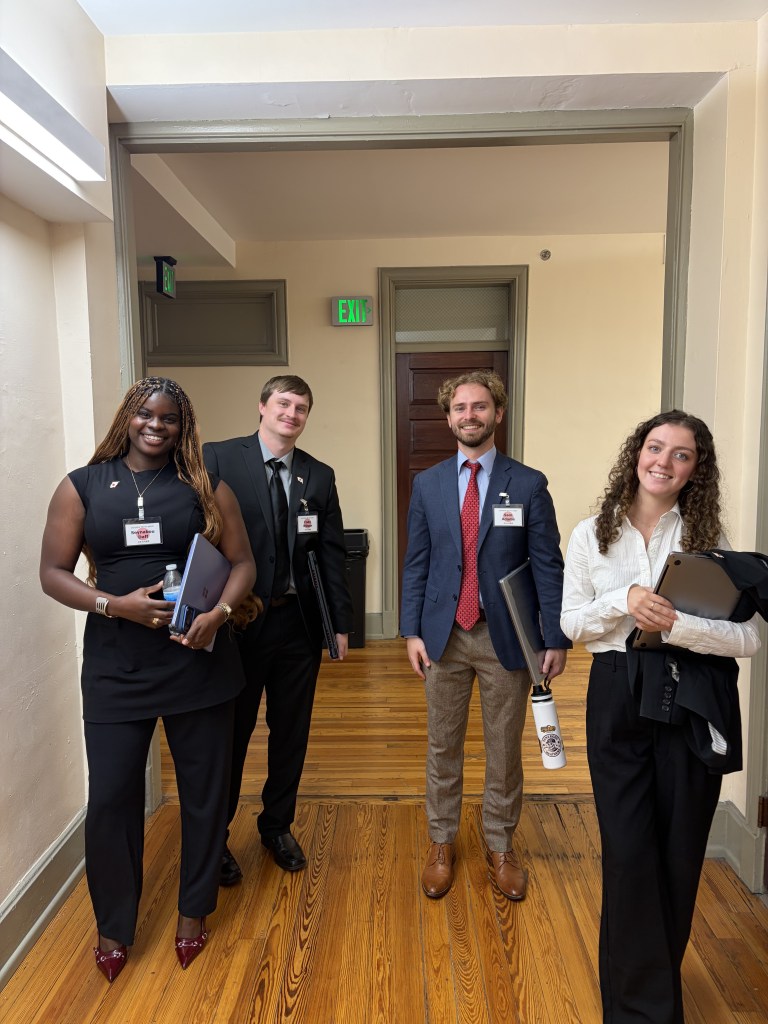
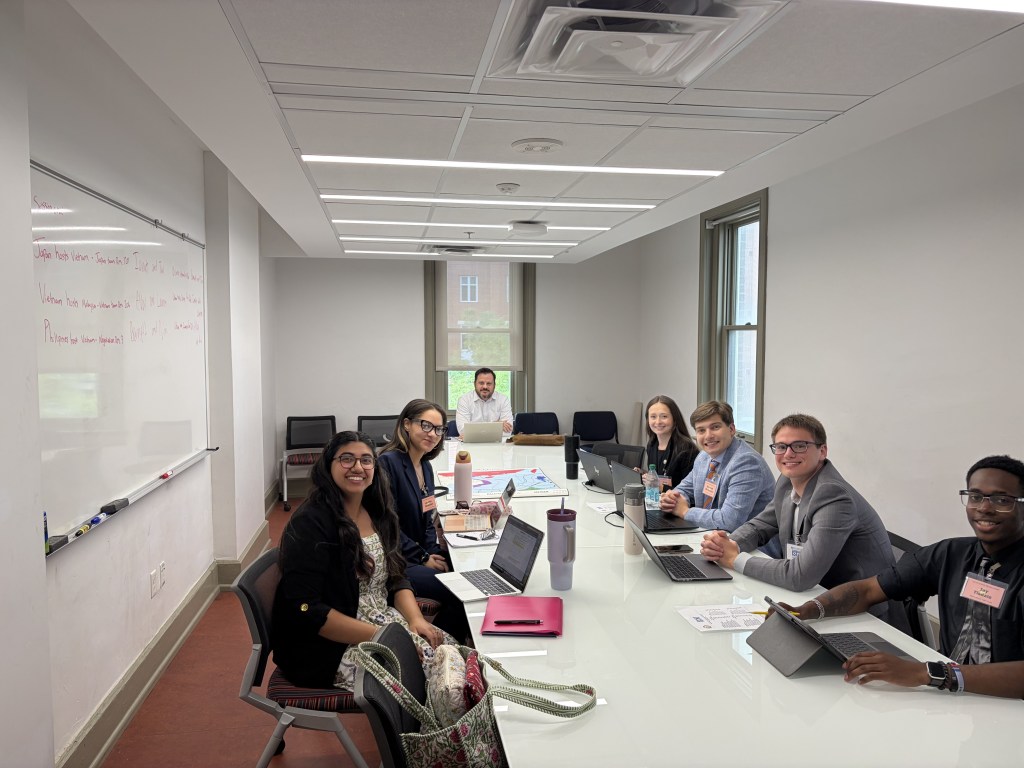
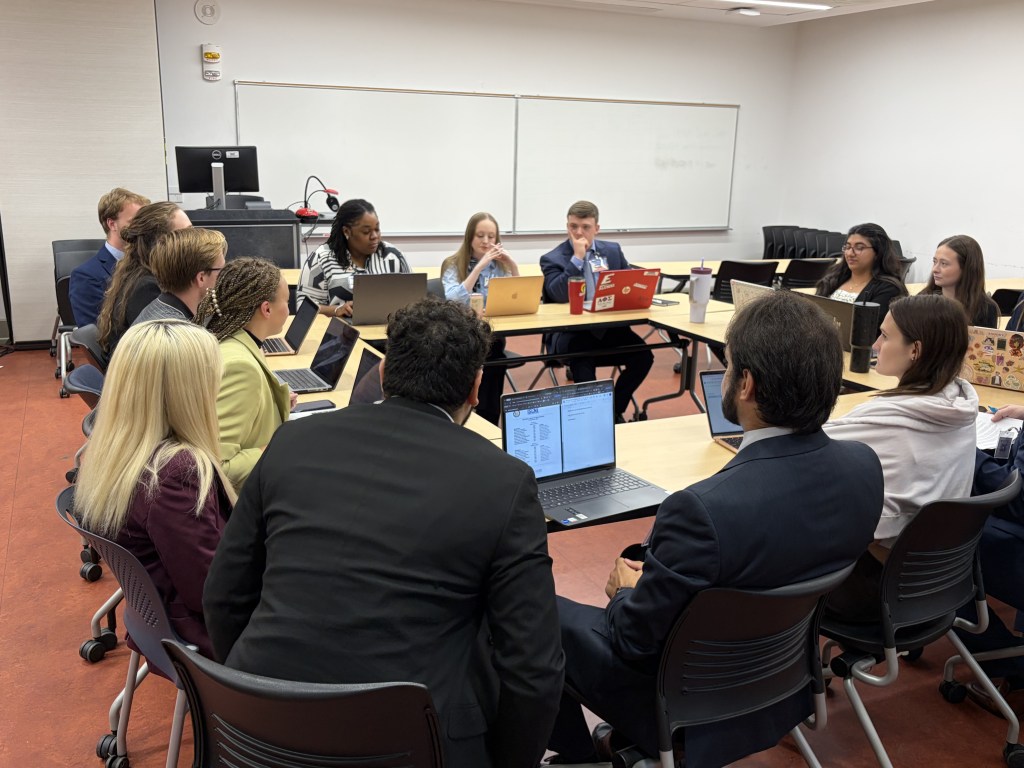
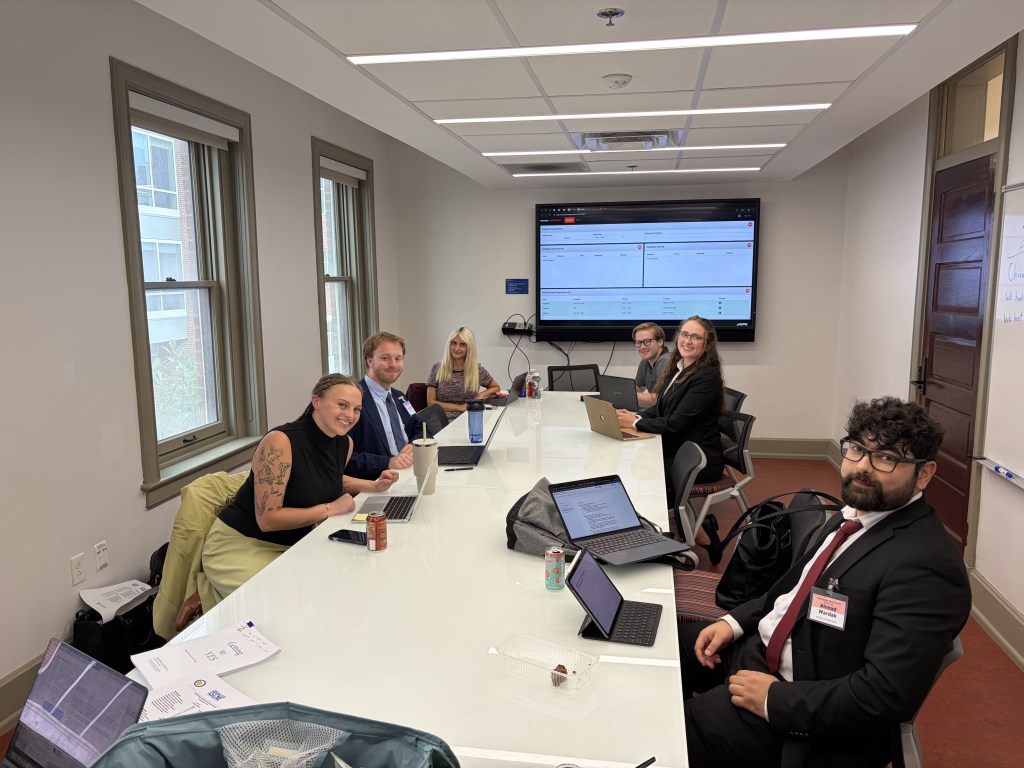
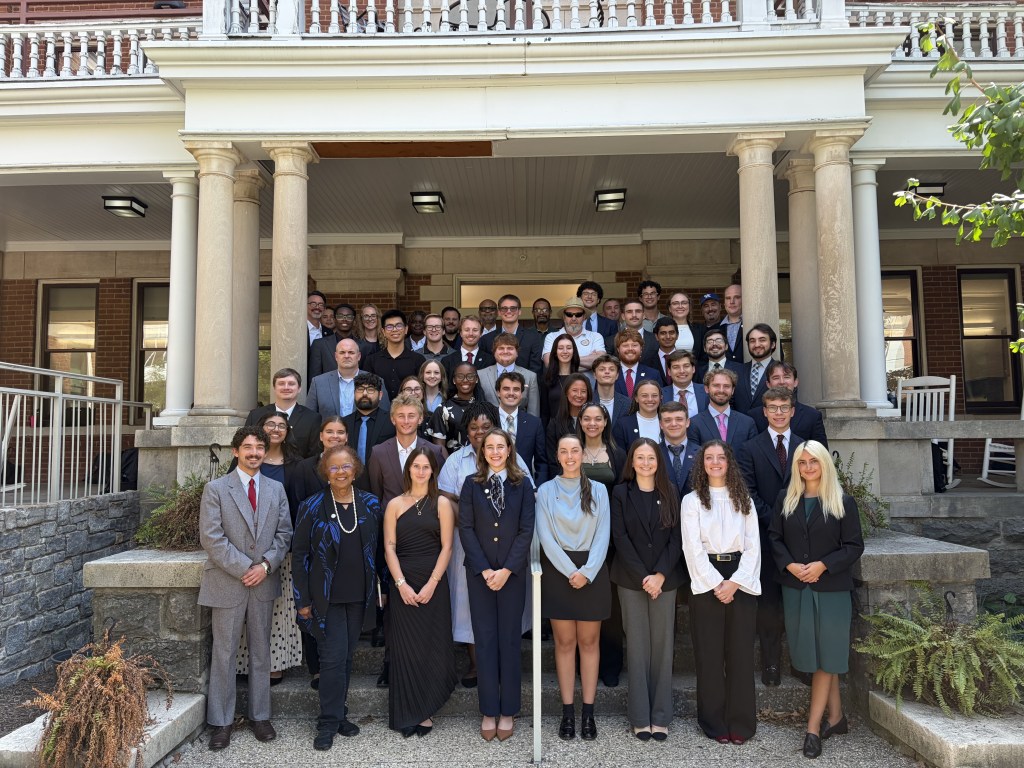
Through the weekend of September 18-19, the fall 2026 Patterson School cohort participated in the International Strategic Crisis Negotiation Exercise (ISCNE) presented by the U.S. Army War College. The exercise provides a unique opportunity for students to participate in two days of fast-paced negotiation rounds guided by the privileged instructions provided to them and the foreign policy positions of their assigned nations. This year, the exercise centered on the territorial dispute in the South China Sea (SCS). Teams involved were China (led by Griffin Winn), the United States (led by Lauren Wright), Indonesia (led by Kathryn Braman), Malaysia (led by Gary McCollum), Vietnam (led by Ionut Moga), the Philippines (led by Elizabeth Nieto), and Japan (led by Mia Durham).
The dispute centered around China’s proclaimed “ten-dash-line,” which crosses into territory legally and historically claimed by the other Southeast Asian nations involved, including Taiwan and Brunei. Active since 1994, the United Nations Convention on the Law of the Sea (UNCLOS) enforces exclusive economic zones (EEZ) as waters extending 200 nautical miles beyond a nation’s territorial waters in which that nation has exclusive rights to explore, exploit, manage, and conserve the natural resources. Also established through UNCLOS is the Freedom of the High Seas and Freedom of Navigation, dictating that no nation should have exclusive control over international waters, existing beyond any established EEZ. Non-regional participants Japan and the United States routinely conduct Freedom of Navigation Operations (FONOPS), in which they pass through the SCS to signify adherence to Freedom of the High Seas.
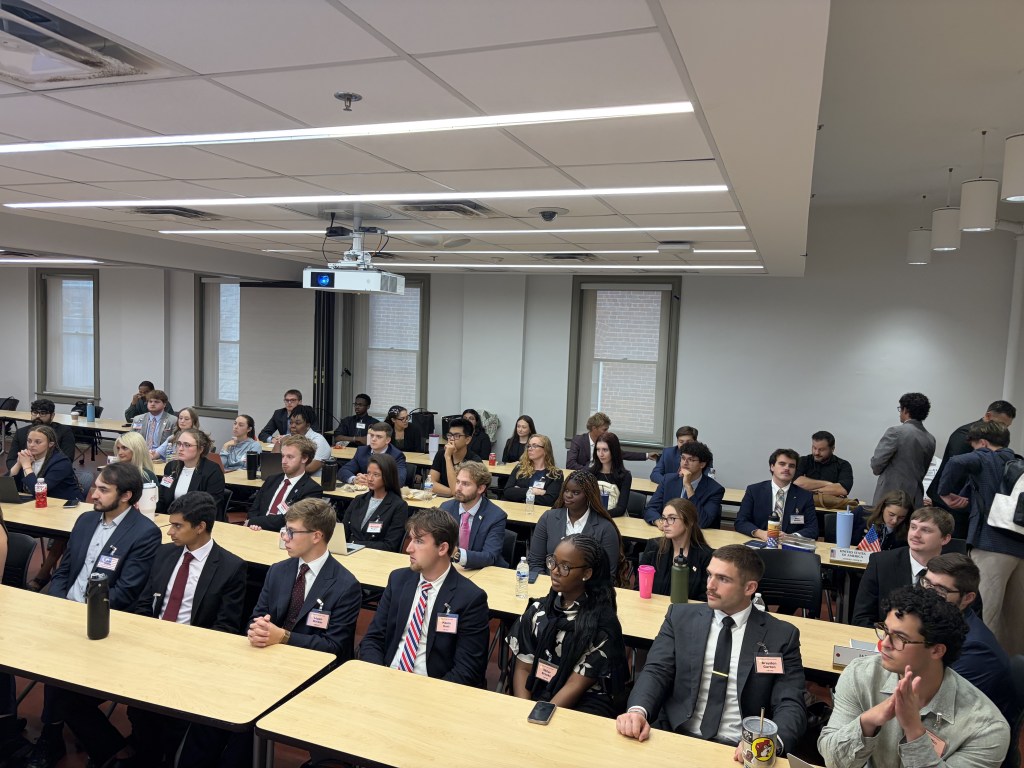
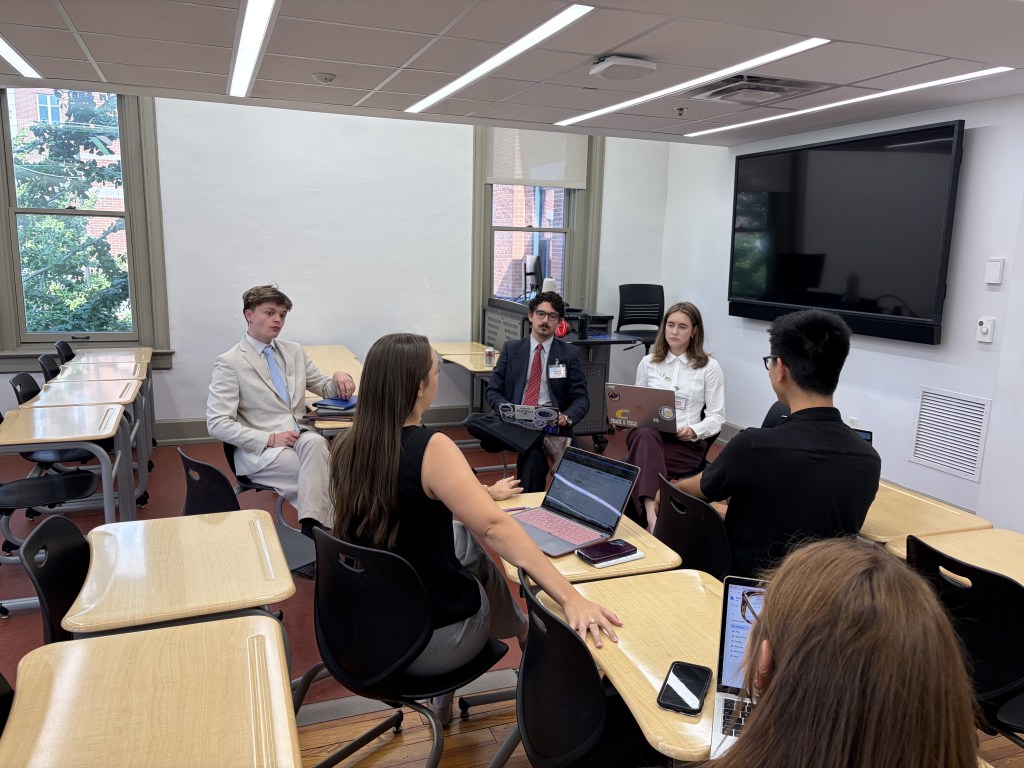
Students began Friday afternoon with an opening plenary session where each delegation’s leadership gave a short speech to the cohort. Two rounds of scheduled negotiations followed in which each delegation had the opportunity to meet with one another. The rest of the negotiation simulation continued in ad hoc rounds where students were able to have contentious discussions and draft several memorandums of understanding. The first day wrapped with a diplomatic dinner where students remained within their roles and had fewer formal discussions regarding the day’s events. The second day started early with several more ad hoc negotiation rounds where students rushed to wrap up proposed MOUs. After the last ad hoc round, the simulation ended with a closing plenary session. Before departing, students, faculty, mentors, and U.S. Army War College personnel engaged in a brief after-action session and discussed how they learned things about themselves and the diplomatic process during the simulation, bringing to a close another successful year of the ISCNE simulation.


Leave a comment