
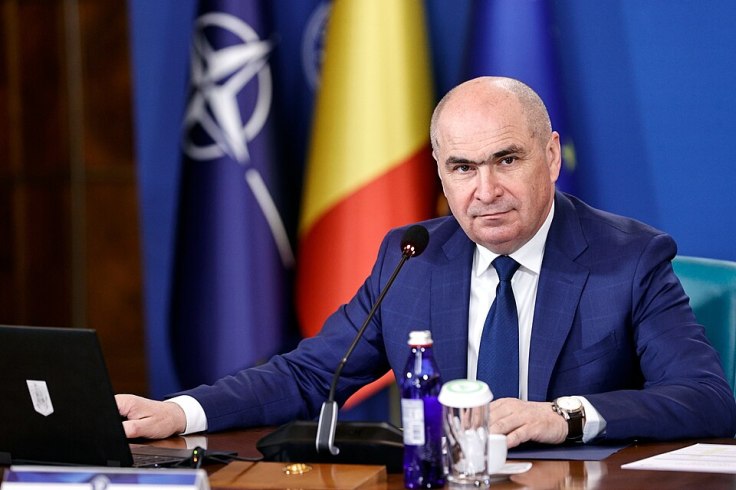
gov.ro / Romanian Government

By Ionut Moga
Romania still only has an interim government, but positive steps have been made recently. Romania has had an interim government since May, when the former Prime Minister, Ilie Bolojan, was removed from the government after a vote of no confidence when the Social Democratic Party (PSD) decided to not be in the governmental coalition at the time. Romania has previously voted twice to install a new government, but neither vote was successful.
On September 17, Romania’s president, Nicusor Dan, decided that Siegfried Muresan will be the new nominee for Prime Minister, a member of the National Liberal Party (PNL). This nomination has come after going through a mandatory consultation process with all of the political parties that are in the Romanian Parliament. Following his nomination, he named the ministers that would form the government coalition. They come from PNL and two other parties: Save Romania Union (USR) and the Democratic Union of Hungarians in Romania (UDMR) parties. The three parties that would form the government have a problem though, and that is the fact that they only have 170 seats in the Parliament between them, which is far short of the 233 votes needed in order to have the new government. This means that negotiations with other members of Parliament are required in order to pass the government. The vote for the new Parliament is expected to take place next week.
The issue of Romania only having an interim government matters for several reasons. Firstly, it matters for Romania’s economic development. This issue matters for the development of Romania because Romania would finally be on the path of economic stability. Romania received a warning on July 31st from Fitch Rating, a reputable international credit rating agency, that Romania’s credit rating would be classified as junk if Romania continued to rely on an interim government which would decrease the number of foreign investors willing to invest in the Romanian economy. Having a government would be a keyway to ensure stability so that foreign investors are willing to invest in the country’s economy. This also matters because an interim government for the country is limited in regard to what they can do to govern the country. Usually, all that an interim government can do is to pass any and all legislation that is detrimental for the country. In other words, they are not allowed to pass new legislative proposals or issue ordinances that are not an emergency for the country at the moment like a piece of legislation for a new highway. If this vote for the new government does not pass, Romanian Parliament could be dissolved which would force early elections for the country. This could mean a new government composition given the fact that the polling would change who would be in charge if there were parliamentary elections in Romania today. According to the polls, the Alliance for the Union of Romanians party (AUR) would lead the vote with 34% of the vote. Then, PSD, PNL, USR, and UDMR would receive, 25%, 18%, 8%, and 5% of the vote respectively which would likely change the makeup of a future Romanian government, with one of the possible coalitions being the one between PSD and AUR.
In conclusion, Romania needs a new government if it wants to avoid economic consequences in the future, and it would be beneficial for the overall stability of the country to have a government with all the powers that the interim government lacked.


Leave a comment