NASA Earth Observatory, Public domain, via Wikimedia Commons

By Taylor Bishop
Recent discussion surrounding the proposed $50 billion Alaska LNG project highlighted differing public statements from South Korean officials, the Trump Administration, and project stakeholders regarding the status of negotiations. According to President Trump, Seoul agreed to the aforementioned deal and even announced it in front of the media. The move prompted the South Korean President Lee Jae Myung to post on social media that the negotiations were still in progress and “the Alaska LNG project will proceed to working level under the preconditions that 1) its commercial viability is confirmed and 2) it complies with the legal procedures of the Republic of Korea.” On the U.S. Department of Commerce’s website, regarding the deal, the language states, “ The United States and Korea have agreed to commence working on the Alaska LNG project, subject to meeting commercial reasonableness under the Strategic Investment MOU and all applicable domestic legal requirements.” The differing characterizations of the negotiations raise questions regarding the project’s current status. Whether South Korea ultimately moves forward in the project remains subject to ongoing negotiations and domestic approval; the episode raises broader questions about energy security in East Asia.
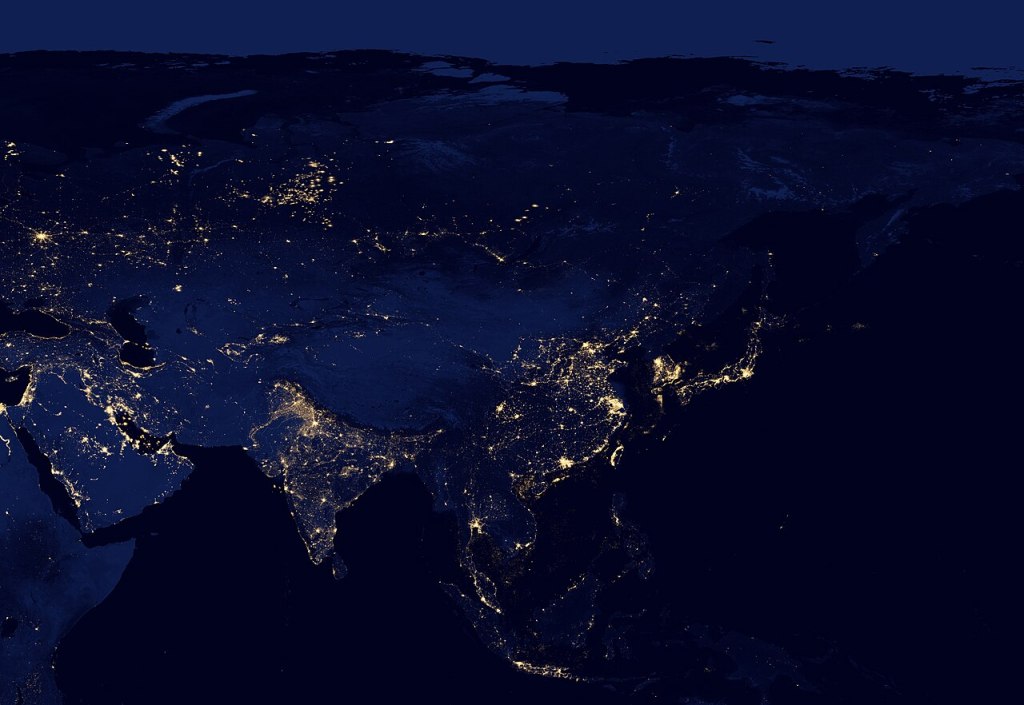
Since the start of the U.S.-Iranian conflict, energy prices across East Asia have hit record highs, putting immense strain on governments across the region. To give an idea of how vital this region is to Asia’s energy consumption, in 2025 roughly 90% of the liquefied natural gas (LNG) that transited the Strait of Hormuz was bound for Asian countries. Most oil and LNG used in East Asia are burned to generate electricity, support the commercial or industrial sector, and the fertilizer/chemical industry. When maritime traffic in the Strait was disrupted, countries across East Asia reacted very differently as they tried to weather the storm. Singapore and Taiwan, which rely heavily on Middle Eastern LNG, used their capital to buy LNG from the spot market at premium prices. As suggested by analysts, this is not a sustainable alternative, as prices can become volatile quickly as demand and supply in the market fluctuate, and exporters, importers, and consumers have to absorb differing costs. Meanwhile, other developing states like Laos and Cambodia have struggled to pay spot-market prices, leaving them in an even more precarious position. In Thailand, the government has even promoted switching from suits to T-shirts to help reduce air-conditioning costs. Developed nations, however, seem to be more insulated, for the most part, from the fluctuations in the market; chief among these are China, Japan, and South Korea, which all hold to a varying degree of strategic reserves, although strategic reserves are generally intended to mitigate short- to medium supply disruptions rather than provide a permanent solution. Analysts have noted that sustained energy disruptions could affect sectors such as semiconductor manufacturing, fertilizer production, and electric vehicle supply chains.
Keep in mind, East Asia as a whole is not resource-deprived by any means; Indonesia, Malaysia, and Laos all produce various forms of energy meant for consumption across various markets, but it is not nearly enough to fill the gap left in the energy sector. That said, many states are actively pursuing divestment in the sector. As part of their response strategies, some countries have increased reliance on older, more established alternatives such as coal-fired generation capacity. For example, China, which has pursued a policy of flexibility between coal and gas, recently announced an agreement to purchase and import 10 million metric tons of coal from the United States. This followed the recent Xi-Trump meeting in September. South Korea is pursuing nuclear energy expansion, while other states like Vietnam, or in our earlier case, South Korea, are looking at other stable regions to secure LNG contracts.
As states continue to pursue national energy-security objectives, the episode has sparked renewed discussion about regional coordination mechanisms to insulate states from further blows to their economies. That’s why this week, amid the backdrop of the U.S. – South Korean deal, volatile oil and gas prices, and various Asian states vying for some form of market stability, energy ministers from across ASEAN are meeting in Manila to address the calls for a coordinated response but also renewed attention to the ASEAN Petroleum Security Agreement (APSA). The APSA was first signed in 1986, revised in 2009, and designed to provide a regional mechanism for responding to petroleum supply disruptions. Under APSA, a member state may declare a critical shortage of petroleum when it faces a shortfall of at least 10 percent of its normal consumption for 30 days or more. In such a situation, ASEAN members may activate a coordinated response to assist the affected state. While political and logistical limitations have constrained APSA’s effectiveness, the agreement provides a foundation for regional energy ministers to pursue greater cooperation during periods of market instability.


Leave a Reply