
Agência Senado, CC BY-SA 4.0, via Wikimedia Commons

By Nimi Bala
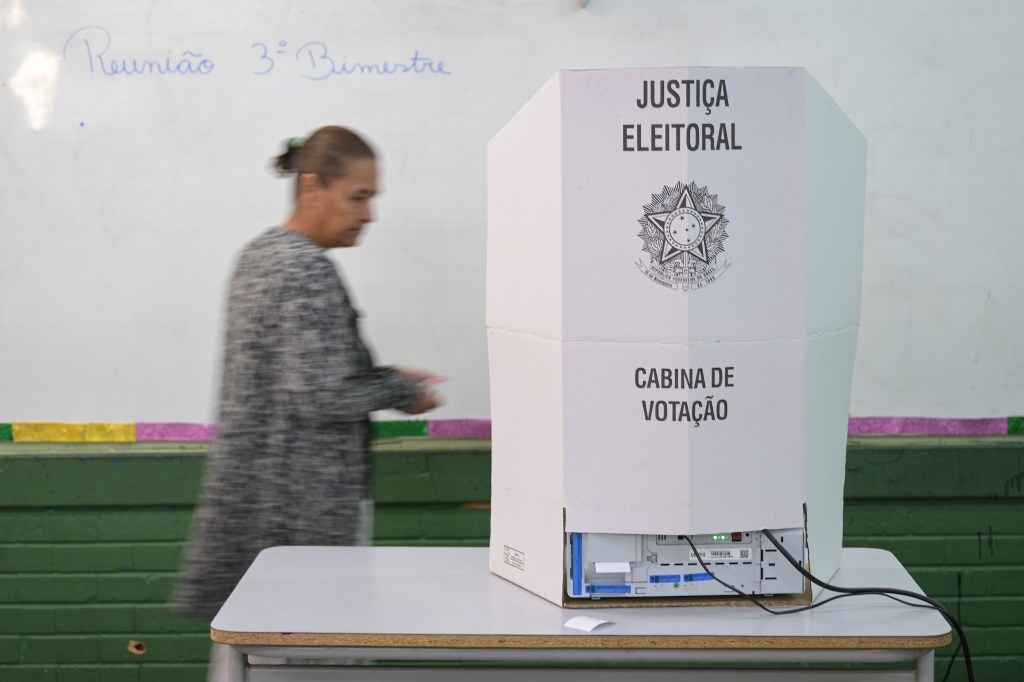
On October 25, 2026, Luiz Inacio Lula de Silva, more commonly known as Lula, beat Flávio Bolsonaro to become Brazil’s president for a historic fourth term. Bolsonaro, who was predicted to win the election after coming in first during the first round of elections earlier this month, came in second after Lula pulled off an unexpected win. Lula won 51.79% of the votes and secured 4.4 million votes over Bolsonaro, and the second round of the presidential election also saw the lowest number of abstentions in a presidential run-off election since 2006.
Lula has now become the first president to win the election in the second round after losing the first-round election since 1989 and he becomes the first president democratically elected for a fourth term in Brazil. His unprecedented win can be attributed to the grassroots campaigns, youth mobilization, especially through a WhatsApp group called “Lula’s Army,” which was created by young Brazilians, and the use of digital campaigning after the first round of elections. Many experts also state that Bolsonaro’s arrogance and behavior of acting like the president-elect after winning the first round of elections may have turned away many potential voters from him. Many experts also stated that Flávio Bolsonaro lacked the appeal and charisma that was associated with his father Jair Bolsonaro, the former president of Brazil, which may have also played a role in Bolsonaro losing the second round.
Lula’s election win can be seen as something of a start of the changing of the political tide in Latin America. In the past 18 months, almost every election held in Latin America was won by the right-wing, and most importantly, almost every candidate that was backed by US President Donald Trump won their major election in Latin America. Lula has become one of the first candidates to win a major election without the endorsement of Trump. Lula’s election win may be the start of the stopping of the right wing tide that has swept across Latin America. This could also have implications for the United States, as this is one of the first global elections where proximity to Trump did not help the candidate win the election. This could be the beginning of a decrease in Trump’s influence on global politics, but it is too early to be certain what effect this truly has on Trump’s global influence.
Lula’s win may also not completely stop the right-wing political tide. Despite Lula’s left wing Worker’s Party winning the presidential election, the right-wing parties have a majority in Brazil’s legislative body, meaning that Brazil will be operating under a split government. The right-wing legislative body may make it difficult for Lula to pass more progressive and liberal policies, and it might give the illusion of an ineffective government. It may also force Lula and his party to adopt more moderate or center policy positions in order for legislation that could benefit the public to pass through the legislative body.
Despite losing the election, Bolsonaro has refused to concede the election to Lula. Bolsonaro claims that there were irregularities in the elections, and his party’s president has stated that there are still many questions that need to be answered regarding the votes and the elections. Despite these claims, Bolsonaro’s Liberal Party has acknowledged the election results and Lula’s presidential win. In a video which was released after the election, Bolsonaro claims that the election was not fair and equal because the Supreme Court granted a two hour extension of the polls at the request of the Lula campaign because of heavy rains in southern Brazil which were affecting the people’s ability to get to the polls and vote on election night. US President Donald Trump joined in on the discourse, stating that the Brazilian election was very strange but that at the same time he would not be getting involved with the election issue in Brazil.
Bolsonaro later echoed Trump’s claims following the 2020 election, stating that he was the president of Brazil and that criminals had stolen the election from him and instead installed a tyrannical government. He also claims that he is being subjected to a witch hunt, which is a similar claim that Trump made in connection to his various charges following the 2020 election. Hours after losing the election, the Supreme Court in Brazil asked Bolsonaro to turn over his passport as a part of another separate investigation into Flávio Bolsonaro on corruption charges. This request came after Bolsonaro had visited his father, Jair Bolsonaro, who is currently under house arrest after he was sentenced to 27 years in prison for the coup and his role in the coup attempt that took place after the 2022 election, where Jair Bolsonaro lost to Lula. This would have effectively stopped Bolsonaro from leaving the country, but on Tuesday after the election, Bolsonaro and his family crossed into Argentina, then flew into the United States, and are currently in Miami. Bolsonaro claims that he will lead the opposition against Lula from the United States.
These claims could have dangerous effects on Brazilian democratic institutions. If Bolsonaro continues his claims that the election was stolen, then it could cause the public to lose trust in Brazilian public institutions and elected officials. This distrust of public institutions is one of the first steps toward an environment of democratic backsliding. Brazil already has a history of alternating between periods of democracy and autocracy, and this distrust of public institutions that Bolsonaro is trying to sow could be what pushes Brazil toward another period of anocracy or autocracy. There is already a global trend with more and more states becoming autocratic or adopting autocratic tendencies in recent years. Brazil will serve as a test case for whether democratic institutions are strong enough to stand against the tide of authoritarianism and be the beginning of turning the tide back towards democratization of global political systems, or if the autocratic trend will continue.


Leave a Reply